English
 русский
 Español
 عربى
عربى
A maintenance engineer at a beverage plant replaced bronze bushings with polymer bearings on a conveyor drive. The bearings ran silent and grease-free for two weeks, then seized during a high-speed shift. The root cause was not a defective batch. The application exceeded the material's pressure-velocity (PV) limit, and the shaft surface was too rough.
Polymer bearings are not drop-in replacements for bronze or steel. They are engineered composites with specific load, speed, and temperature ceilings. When applied inside those limits, they eliminate grease, resist contamination, and reduce noise. When applied outside them, they fail quickly and unpredictably.
Core conclusion: A polymer bearing succeeds only when its PV rating, thermal conductivity, and shaft compatibility match the real operating conditions. Start with load and speed, not with the material name.
Content
- 1 What Polymer Bearings Actually Are and How They Carry Load
- 2 Material Comparison: Where Polymer Bearings Beat Bronze and Where They Don't
- 3 The Hidden Metrics That Decide Service Life
- 4 Where Polymer Bearings Are Used: Application Distribution
- 5 Selection and ROI: A Practical Decision Path
- 6 Maintenance and Compliance Considerations
What Polymer Bearings Actually Are and How They Carry Load
Most polymer bearings are thermoplastic alloys reinforced with glass or carbon fibers. Solid lubricants such as PTFE, graphite, or molybdenum disulfide are compounded into the matrix. During the first few revolutions, the bearing transfers a thin lubricating film to the shaft. After that, the film and the polymer wear surface carry the load together.
Unlike a sintered bronze bushing that relies on oil held in pores, a polymer bearing supplies its own lubrication. It cannot be re-greased, and it does not need to be. That property creates both advantages and limits.
Key characteristics
- Dry-running capability: no oil or grease, so no lubricant migration into product or environment.
- Low friction: typical coefficient of friction between 0.05 and 0.20 depending on material and shaft finish.
- Contamination tolerance: polymer bearings tolerate dust better than rolling elements, but abrasive particles still accelerate wear.
- Thermal limit: polymers conduct heat poorly. Friction heat builds up at the contact zone and caps the maximum PV.
- Shaft requirement: a hard, smooth shaft (typically 45 HRC or harder, Ra 0.2–0.8 µm) extends life; a soft or rough shaft shortens it.
Engineering plastic bearings such as the HZGSM sliding bearing use this principle for general mechanical duty. They are a practical starting point when the application is clean, the load is moderate, and the speed is continuous.
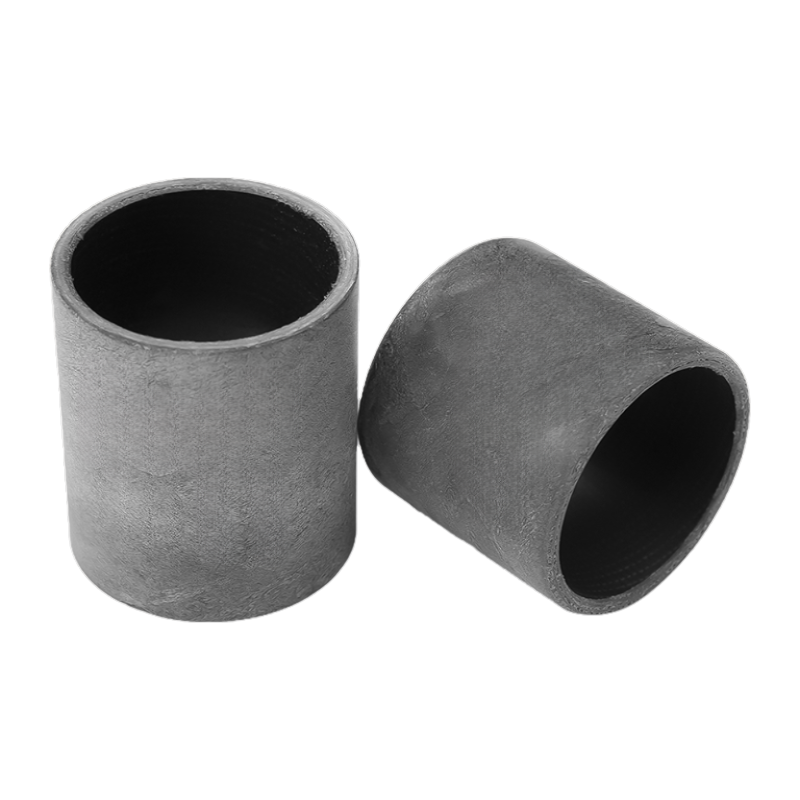 HZ-GSM Engineering plastic sliding bearingThe most popular G material in the world. The G series bearings can meet various different needs in a wide range of fields - they are truly versatile. Typical applicat...View Product →
Material Comparison: Where Polymer Bearings Beat Bronze and Where They Don't
Selecting a polymer bearing begins with a material family. The table below summarizes typical limits. Values are indicative, not guarantees. Always verify with the manufacturer's datasheet and a real test.
For a deeper comparison between self-lubricating and boundary-lubricated designs, see this practical guide.
The Hidden Metrics That Decide Service Life
Published PV limits are measured under ideal laboratory conditions. Real service life depends on four hidden variables: shaft roughness, ambient temperature, contamination, and duty cycle. The chart below shows relative life for a standard POM bearing under different field conditions.
In dusty environments, abrasive particles embed in the polymer and act like sandpaper on the shaft. In wet conditions, some polymers absorb moisture and swell, changing clearance. Above 60°C, thermal expansion and reduced mechanical strength shorten life sharply. These effects are not visible in a simple PV calculation.
Where Polymer Bearings Are Used: Application Distribution
Polymer bearings have captured specific niches where lubrication is undesirable or impossible. The distribution below reflects typical industrial usage based on material suppliers and OEM designs.
Automotive applications include pedal pivots, seat mechanisms, and throttle linkages where grease would attract dust or migrate. Food and beverage lines use polymer bearings because they can be washed down without re-lubrication. Medical and cleanroom equipment benefit from the absence of oil mist and particles.
Selection and ROI: A Practical Decision Path
Choosing a polymer bearing is a five-step process. Skipping steps leads to premature failure and a false conclusion that "polymer bearings don't work."
Load (N) divided by projected area (mm²) gives pressure. Multiply by surface speed (m/s). Compare with material rating.
Continuous ambient plus friction heat must stay below the material's continuous service temperature. Add a safety margin of 20°C.
Measure hardness and roughness. A polished, hard shaft can double or triple life compared with a rough, soft shaft.
Identify dust, moisture, chemicals, and washdown. Select a material with proven resistance.
Test the exact combination of bearing, shaft, and load. Laboratory data cannot replace a field trial.
For high-precision or high-speed applications, a precision engineering plastic bearing such as the HZLIN series offers tighter tolerances and lower running clearance.
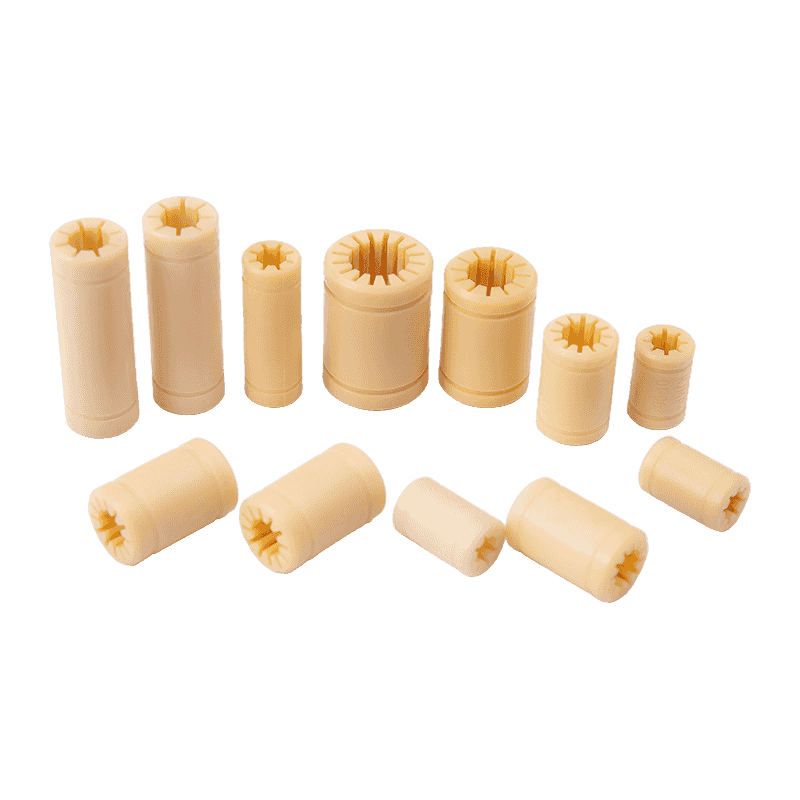 HZ-LIN Precision engineering plastic bearingEngineered for high-precision assemblies, the HZ-LIN Precision Bearing features ultra-low dimensional tolerances (±0.02mm) and a smooth bore finish. Its low moisture a...View Product →
Return on investment comes from eliminating grease, reducing maintenance labor, and avoiding product contamination. In a food plant, the cost of a grease-related recall far exceeds the price difference between bronze and polymer. In a consumer product, the absence of oil stains can be a decisive quality advantage.
For a wider range of self-lubricating bearing options, including flanged and thrust designs, see the manufacturer's catalog.
Maintenance and Compliance Considerations
Polymer bearings are often described as maintenance-free, but that does not mean inspection-free. A practical maintenance plan checks three items at regular intervals: axial and radial clearance, surface wear on the shaft, and evidence of overheating such as discoloration or odor.
From a compliance standpoint, polymer bearings avoid the lubricant contamination issues that affect food contact, medical devices, and cleanroom manufacturing. Many grades meet RoHS and REACH requirements. For food and beverage equipment, verify that the specific grade carries the necessary FDA or EU 10/2011 compliance. For heavy-load, low-speed applications where a thermoset is preferred, a high-strength cloth-reinforced phenolic bearing can carry loads beyond standard thermoplastics.
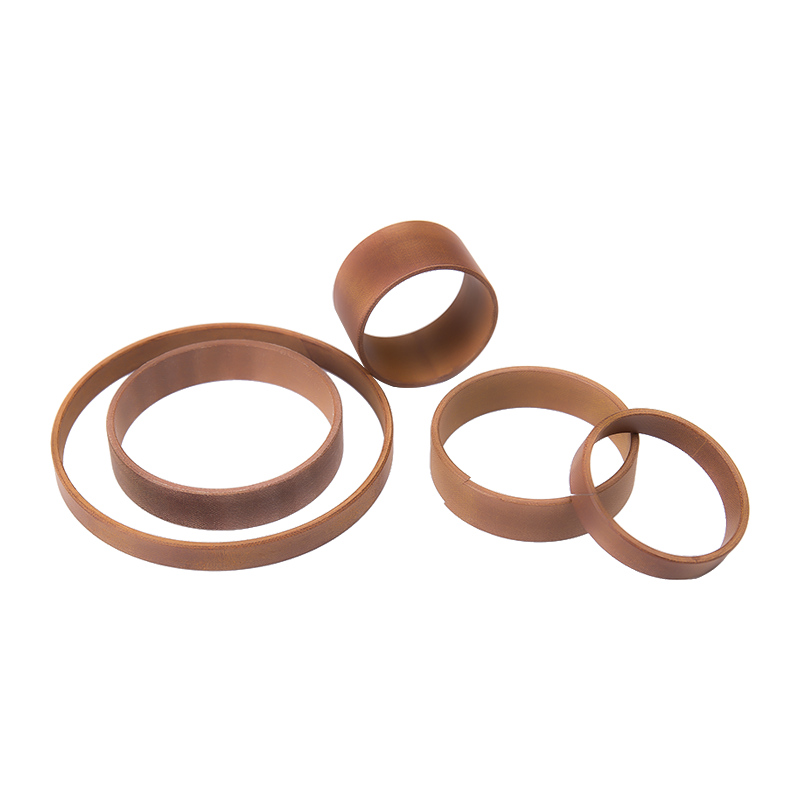 HZ-RFC High strength cloth-reinforced phenolic bearingMaterial IntroductionView Product →
Before any changeover, confirm that the polymer bearing's thermal expansion does not close the running clearance at the maximum operating temperature. A clearance that is correct at 20°C may become zero at 80°C. This single error accounts for many field failures.
Polymer bearings are a focused engineering solution, not a universal upgrade. They win in applications where lubrication is impossible, contamination is unacceptable, or noise must be minimized. They lose when PV limits are exceeded, temperatures run high, or shaft preparation is neglected. The correct approach is to calculate the real operating conditions first, then select the material family that matches them. With that discipline, polymer bearings deliver reliable, long-term performance without grease.