English
 русский
 Español
 عربى
عربى
A press fit that is too loose lets the bearing creep; too tight and you crush the bore or crack the housing. For sleeve bearings, the margin for error is often smaller than for rolling bearings because many self-lubricating materials are thin-walled and relatively soft. The correct interference depends on material, wall thickness, load, temperature, and housing rigidity. Get it wrong and you will see premature wear, noise, or catastrophic seizure within weeks.
Core conclusion: For most self-lubricating and boundary-lubricated bearings, aim for 0.05% to 0.15% interference on diameter, but always verify with the bearing manufacturer. Thin-walled bearings need the lower end; rigid bronze or bimetal bearings can take more. Never rely on rules of thumb alone.
Content
- 1 Why Bearing Press Fit Matters More Than You Think
- 2 Core Principles of Press Fit Design for Bearings
- 3 Press Fit Tolerance Comparison: Metals vs. Polymers vs. Composites
- 4 Hidden Metrics: How Interference Affects Bearing Life
- 5 Industry Application Distribution for Press-Fit Bearings
- 6 Selection Guide and Installation Steps
- 7 Maintenance and Compliance Recommendations
Why Bearing Press Fit Matters More Than You Think
Press fit, or interference fit, is the intentional size difference between the bearing outside diameter and the housing bore, or between the shaft and bearing inside diameter. The goal is to prevent relative motion under load. When a bearing ring or sleeve is mounted with a loose fit, it will creep on its seat. Creep leads to fretting corrosion, wear particles, and eventually a loose, noisy joint. On the other hand, excessive interference introduces high hoop stress. For a thin-walled self-lubricating bearing, that stress can ovalize the bore, reduce clearance, or cause the material to yield.
Consider an automotive shock absorber. The bearing is pressed into the damper eye and must survive millions of small oscillations. If the press fit is too light, the bearing rotates in the housing and wears the aluminum eye. If too heavy, the bearing bore closes in and grips the shaft, destroying the damper action. This is why major automotive suppliers like Chuan'nan have strict press-fit specifications.
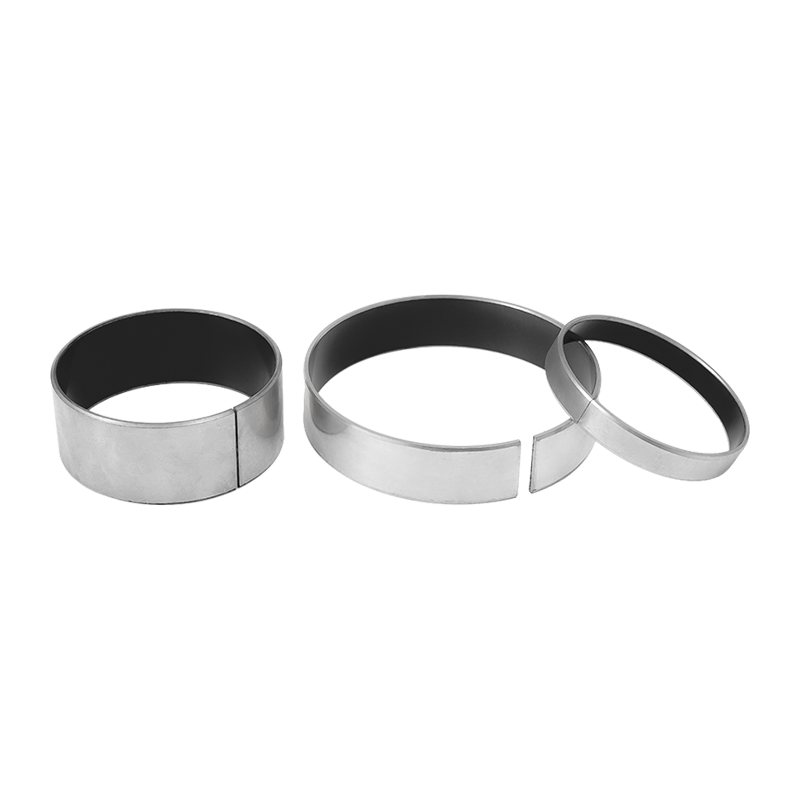 HZ-10 Self-Lubricating Bearings ManufacturersHZ10 Type 1 steel-based self-lubricating bearing Material Features HZ1O-carbon steel self-lubricating bearings used high-quality low-carbon...View Product →
Self-lubricating bearings, such as those in the HZ-10 series, are often designed with a steel backing and a sintered bronze layer with PTFE or similar filler. The steel backing provides structural strength, but the thin wall still demands careful interference control. A common mistake is to use the same interference as for a solid bronze bushing. That will damage the bearing.
Core Principles of Press Fit Design for Bearings
Four factors dominate press-fit design. Use them to set your tolerance zones.
Material
Bronze and bimetal bearings tolerate higher interference because they are rigid. Polymer and composite bearings creep under sustained load, so they need lower interference and sometimes a retaining adhesive.
Wall Thickness
Thin-walled bearings (wall thickness less than 10% of outside diameter) are sensitive to hoop stress. Reduce interference or use a housing with a looser fit and retaining compound.
Load
Heavy dynamic loads require higher interference to prevent creep. But if the load is primarily static, a lighter press fit may suffice. Always consider the direction of load relative to the joint.
Temperature
Differential thermal expansion can change the fit. If the housing is aluminum and the bearing is steel, the interference increases at high temperature. If the shaft grows faster than the bearing, clearance can disappear.
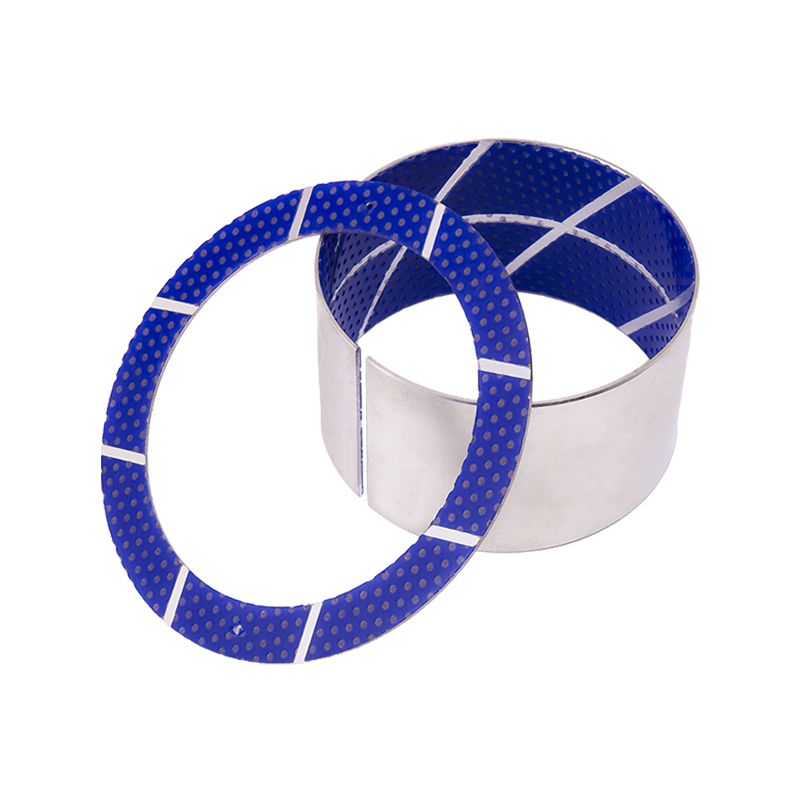 HZ-20 Boundary Lubricated Bearings ManufacturersHZ2B porous sintered copper POM/filler (blue) boundary lubrication bearing Application Characteristics Low friction coefficient and wear rate under grease lubricatio...View Product →
The classic rule of 0.001 inch per inch of diameter (about 0.1%) works for many rigid metal bearings, but it is a starting point, not a specification. For a 25 mm bore, that is 0.025 mm interference. A thin-walled PTFE-lined bearing might need only 0.012 mm to 0.020 mm. A solid bronze bushing might take 0.030 mm to 0.050 mm.
Press Fit Tolerance Comparison: Metals vs. Polymers vs. Composites
The table below compares typical interference ranges for common bearing materials. Always confirm with your supplier, because specific grades and wall thicknesses vary.
Table: Typical press-fit interference ranges for sleeve bearing materials. Values are for 20–50 mm outside diameter; smaller or larger sizes may need adjustment.
Hidden Metrics: How Interference Affects Bearing Life
The relationship between interference and bearing life is not linear. A small amount of interference is beneficial because it prevents creep. But once you exceed the optimal range, life drops sharply. The chart below shows relative life for a typical self-lubricating bearing as interference increases.
0.02%
0.05%
0.10%
0.15%
0.20%
The peak life occurs around 0.10% interference for this example. Below that, creep and fretting reduce life. Above that, hoop stress and bore closure dominate. Note that the exact curve depends on wall thickness and load. For thin-walled bearings, the peak shifts to lower interference.
Industry Application Distribution for Press-Fit Bearings
Press-fit sleeve bearings are used across many industries. The pie chart below shows a rough breakdown of typical applications for self-lubricating and boundary-lubricated bearings.
Automotive (35%)
Industrial machinery (25%)
Aerospace & defense (20%)
Other (20%)
Automotive includes shock absorbers, steering columns, pedal pivots, and seat mechanisms. Industrial machinery covers conveyors, packaging equipment, and agricultural implements. Aerospace uses press-fit bearings in actuation systems and landing gear components. The "Other" category includes medical devices, food processing, and renewable energy.
Selection Guide and Installation Steps
Follow these six steps to achieve a reliable press fit. Skipping any step increases the risk of premature failure.
Calculate the required interference
Use the bearing manufacturer's data. Consider material, wall thickness, load, and temperature. Do not guess.
Prepare the housing bore
Measure the bore with a bore gauge. Remove burrs and clean thoroughly. A rough surface can reduce effective interference.
Check the bearing
Verify the bearing outside diameter and wall thickness. Inspect for damage. Do not use a bearing that has been dropped or deformed.
Apply force evenly
Use an arbor press or a guided driver. Never hammer directly on the bearing. Apply force to the ring being pressed, not through the rolling elements or liner.
Verify after installation
Check the bore diameter after pressing. It should remain within the specified tolerance. Measure the torque or clearance to confirm.
Document and monitor
Record the actual interference and installation force. Monitor the joint in service for creep or noise. Adjust the specification if needed.
 HZ-800 bimetal composite bearing ManufacturersHZ801 Natural color smooth plate bimetallic composite bearing The HZ801 Natural Finish Bimetal Composite Bearing is engineered to withstand extreme load...View Product →
Bimetal composite bearings, such as the HZ-800 series, are a good choice when you need higher load capacity and can tolerate a slightly higher press fit. They combine a steel backing with a bronze layer, offering a balance of strength and conformability.
Maintenance and Compliance Recommendations
A properly designed press fit is a maintenance-free joint for the life of the bearing. However, you should still include these checks in your maintenance program:
- Inspect for fretting corrosion or black residue around the housing edge. This indicates creep and loss of interference.
- Check for axial movement. Even a few tenths of a millimeter can signal the need for a tighter fit or a retaining compound.
- Monitor operating temperature. Excess heat can relax the interference in polymer bearings.
- Re-torque any clamping elements if applicable.
Compliance with standards such as ISO 286 for limits and fits, or DIN 7190 for press fits, provides a common language with your suppliers. For critical applications, request a test report that includes actual bore and shaft measurements. Our bimetal composite bearings guide explains how to verify these fits in practice.
Remember that press fit is only one part of the bearing system. Clearance, lubrication (or self-lubrication), surface finish, and shaft hardness all affect performance. Work with your bearing supplier early in the design phase to avoid costly rework.
Press fits are deceptively simple. The right interference holds the bearing securely without distorting it. The wrong interference leads to creep, wear, or seizure. Start with the material and wall thickness, calculate your tolerance, and verify with real measurements. If you are unsure, consult the bearing manufacturer. A few minutes of calculation can save weeks of downtime.