English
 русский
 Español
 عربى
عربى
Content
What Is Tribology?
A maintenance engineer opens a gearbox after 8,000 hours of service and finds deep scoring on a bronze bushing. The shaft looks fine, but the bushing has to be replaced. Another machine on the same line has run three times longer without visible damage. The difference is not luck; it is the result of tribology.
Tribology is the science and engineering of interacting surfaces in relative motion. It covers three connected phenomena: friction, wear, and lubrication. Friction resists motion, wear damages surfaces, and lubrication controls both. The word comes from the Greek tribos, meaning rubbing, and the field was formally named in the 1966 Jost Report, which drew attention to the enormous economic losses caused by friction and wear.
For engineers, tribology is not an abstract topic. It determines how long a bearing will last, how much energy a machine consumes, and whether a component fails after weeks or after years.
Why Tribology Matters for Equipment Reliability
Tribology has a direct impact on operating cost. Friction consumes energy, wear shortens component life, and lubrication failures cause unplanned downtime. In rotating machinery, plain bearings, gears, seals, and thrust washers all operate under tribological stress.
The choices made during design — bearing material, surface finish, lubricant type, and hardness — are tribology decisions. A bearing that is too soft may embed contaminants but wear quickly; one that is too hard may transfer wear to the shaft. Understanding friction and wear mechanisms helps engineers avoid the wrong compromise.
Industries as different as automotive manufacturing, wind power, construction equipment, and food processing rely on controlled friction and low wear. Even a small improvement in friction coefficient can reduce energy consumption significantly over thousands of operating hours.
The Three Pillars of Tribology
Most tribological failures can be traced back to one or more of the three core subjects: friction, wear, and lubrication. Understanding how they interact is more useful than memorizing isolated definitions.
Friction and the Stribeck Curve
Friction is the resistance to relative motion between two contacting surfaces. It is usually described by the friction coefficient, which depends on materials, surface roughness, load, speed, and the presence of a lubricant. The Stribeck curve is a compact way to see how friction changes with speed and viscosity. It shows three regimes: boundary lubrication, mixed lubrication, and hydrodynamic lubrication. In boundary lubrication, surfaces touch directly and a thin chemical or solid film prevents severe adhesion. This is where self-lubricating materials become important.
Wear Mechanisms
Wear is the progressive removal of material from a surface. Common mechanisms in bearings include adhesive wear, abrasive wear, fatigue wear, and corrosive wear. Adhesive wear occurs when microscopic contacts weld together and then break, pulling material from one surface. Abrasive wear is caused by hard particles cutting or ploughing the softer surface. Fatigue wear appears as pitting or spalling after repeated cyclic loading. Corrosive wear happens when the environment attacks the surface and the motion removes the reaction product.
Reading wear patterns is a practical skill. Scratches aligned with sliding direction often indicate abrasive contamination, while transferred material suggests adhesive pick-up. Pitting on a bushing surface usually signals fatigue overload or insufficient lubrication.
Lubrication and Lubricants
Lubrication separates surfaces, lowers friction, and carries heat away. Liquid lubricants such as oil and grease form fluid films when speed and viscosity are favorable. In boundary or mixed lubrication, the film is not fully formed, so the lubricant's additive chemistry or a solid lubricant layer carries the load.
Solid lubricants are especially useful where oil cannot be reliably supplied, such as in sealed assemblies, high-temperature environments, or maintenance-free applications. Graphite, PTFE, and molybdenum disulfide are common solid lubricants. When embedded in a bearing matrix, they transfer a thin film onto the mating shaft, creating a tribologically controlled interface. This distinction is explored further in our comparison of self-lubricating versus boundary-lubricated bearing designs.
How Tribology Shapes Bearing Design
A plain bearing is a tribological system in its own right. The shaft, bushing, lubricant, and any contaminants form a small system with a shared destiny. A good bearing material must have a low friction coefficient against the shaft material, resist wear, tolerate slight misalignment, and sometimes embed debris instead of letting it cut the shaft.
Self-lubricating bearings use a metal or plastic backing with a solid lubricant distributed through the working layer. For example, a steel-based self-lubricating bearing uses a steel back for load capacity and a sintered bronze layer filled with a friction-reducing compound. During sliding, the compound is released to form a transfer film on the shaft. This is how a bearing can run with little or no oil supply while maintaining a predictable friction level.
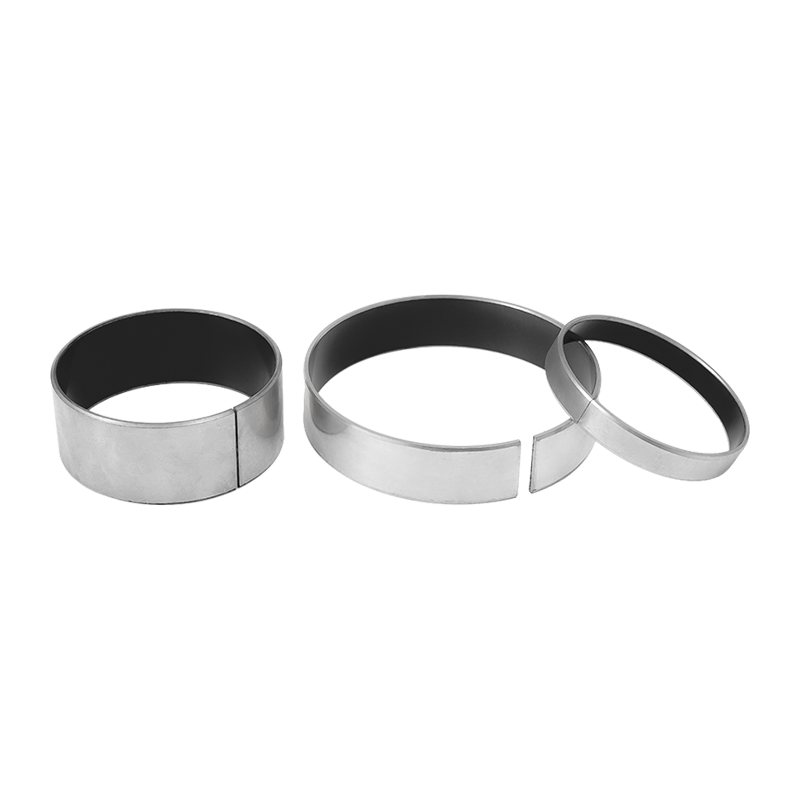 HZ10 Type 1 steel-based self-lubricating bearing Suppliers, Company - Zhejiang HHuazhou is HZ10 Type 1 steel-based self-lubricating bearing Suppliers and Company in China, Wholesale HZ10 Type 1 steel-based self-lubric...View Product →
Selecting the right material group depends on the pressing conditions. High loads and low speeds call for materials with strong solid lubricants such as graphite. For oscillating or linear motion with limited access, engineering plastics offer low friction and corrosion resistance. For axial loading, a thrust washer is a compact solution.
Selecting Low-Friction Components for Real Conditions
Bearing selection starts with the actual tribological load. Speed, load direction, shaft hardness, ambient temperature, contamination, and lubrication type all play a role. The table below summarizes common operating conditions and the material families that typically meet them.
| Application condition | Key tribological demand | Recommended material family |
|---|---|---|
| High load, low speed, intermittent motion | High compressive strength, solid lubrication | Graphite copper bushings |
| Dry running, linear or oscillating motion | Low friction, low wear without oil | Engineering plastic bearings |
| Shock loads or dirty environments | Fatigue resistance, embeddability | Bimetallic composite bearings |
| Axial load | Low friction on thrust face | Thrust washers |
| Corrosive or washdown environments | Chemical resistance | Stainless steel-based self-lubricating bearings |
For high-load, low-speed applications, a graphite copper bushing is often the first choice because the embedded graphite maintains a low-friction film even when grease cannot be used. It tolerates boundary lubrication, handles elevated temperatures, and wears in against the shaft without seizure.
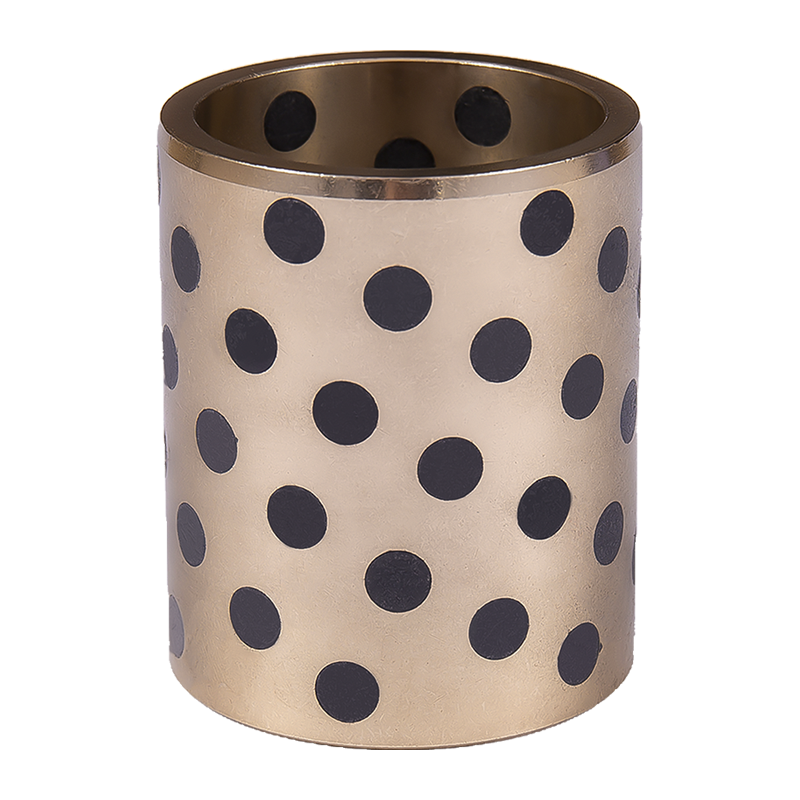 HZ-JDB Wear-resistant graphite copper bushing Suppliers, Company - Zhejiang HuazHuazhou is HZ-JDB Wear-resistant graphite copper bushing Suppliers and Company in China, Wholesale HZ-JDB Wear-resistant graphite copper ...View Product →
For maintenance-free linear or oscillating movements, an engineering plastic sliding bearing can eliminate the need for oil and reduce noise. These bearings resist dirt pickup, tolerate misalignment, and work well in applications where a metallic bushing would suffer from corrosion or heavy wear.
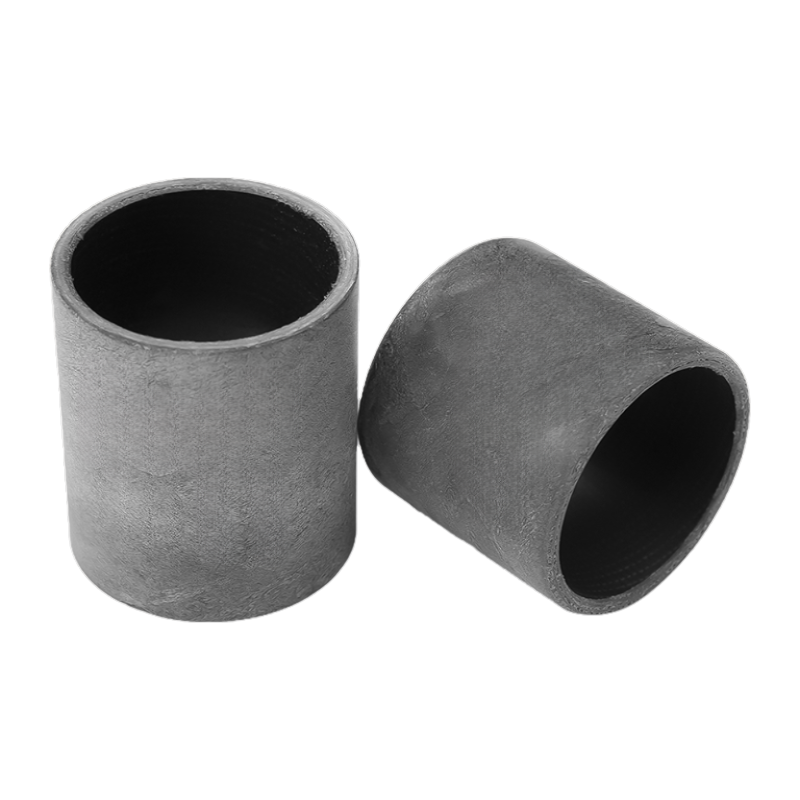 HZ-GSM Engineering plastic sliding bearing Suppliers, Company - Zhejiang HuazhouHuazhou is HZ-GSM Engineering plastic sliding bearing Suppliers and Company in China, Wholesale HZ-GSM Engineering plastic sliding bearin...View Product →
When the load is axial, a washers-style component is more practical than a cylindrical sleeve. Our guide to thrust washers compares standard wear-resistant and sealed versions for different operating conditions.
Reading Wear Patterns in Maintenance
Wear analysis is an entry point into tribology for maintenance teams. A bushing with mirror-polished but smooth running surfaces may have operated in a healthy regime. In contrast, a bushing with deep axial grooving and a rough shaft tells a different story: hard particles were trapped between the surfaces and acted like a cutting tool. This information can save the rest of the machine from the same fate.
Common wear signatures include the following:
- Abrasive scoring – often points to contaminated lubricant or insufficient sealing.
- Adhesive transfer – means local overheating and metal-to-metal contact.
- Fatigue pitting – indicates cyclic overloading or poor oil film formation.
- Corrosive etching – suggests chemical attack from the environment or degraded lubricant.
Once the mechanism is identified, the solution can be a material change, a surface treatment, a different lubricant, or closer maintenance intervals. For example, the performance and material advantages of graphite copper bushings become especially relevant when high temperature and heavy loads degrade conventional oils.
Future Directions in Tribology
Tribology is moving beyond simple material selection. Green tribology aims to reduce energy losses and extend component life in applications where lubricants are difficult to recycle. Surface engineering — textured surfaces, hard coatings, and functional layers — is creating new ways to control friction without relying on external oil. Sensor-equipped bearings and lubrication monitoring are also making tribology data available in real time, allowing maintenance teams to respond before damage occurs.
For bearing manufacturers, the practical consequence is a wider choice of material systems and surface profiles. Coated steel, bimetallic composites, polymer-based materials, and embedded solid lubricants all continue to improve. Designers who understand friction and wear fundamentals will be better prepared to specify the right component for each duty cycle.
Putting Tribology to Work
Tribology is not a topic reserved for tribologists. Maintenance engineers, design engineers, and purchasing teams all make decisions that affect friction and wear: which bushing material to use, which lubricant to specify, how often to inspect, and how to interpret damage. Starting with the basics of friction, wear, and lubrication gives every team member a common language.
The practical message is simple: understand the operating conditions before choosing a bearing, and use the wear signature as feedback from the machine. When oil supply is unreliable or maintenance access is difficult, self-lubricating and boundary-lubricated materials offer reliable alternatives. With the right material and a reasonable finish on the mating shaft, a plain bearing can run for thousands of hours without a single drop of oil.