English
 русский
 Español
 عربى
عربى
A packaging line stopped at 2:47 a.m. when a conveyor drive shaft seized. The maintenance crew found a bronze bushing with deep scoring and transferred metal on the journal. Their first instinct was to blame the material. Bearing failure analysis showed a different story: the housing bore was out of round by 0.05 mm, which reduced the effective radial clearance to zero after thermal expansion. The bushing was a symptom, not the cause.
Core conclusion: More than 60% of premature plain bearing failures trace back to lubrication, contamination, or installation issues, not material defects. A structured analysis, rather than a visual guess, is the difference between replacing a part and fixing the root cause.
Content
- 1 Why Bearing Failure Analysis Starts with Operating Conditions
- 2 Common Plain Bearing Failure Modes: A Quick Reference
- 3 Hidden Indicators: What the Damage Pattern Does Not Tell You
- 4 Where Plain Bearing Failures Hurt Most
- 5 A Practical Selection Process and the ROI of Getting It Right
- 6 Maintenance and Compliance Recommendations
Why Bearing Failure Analysis Starts with Operating Conditions
Plain bearings, including bushings, flanged sleeves, and thrust washers, fail at the sliding interface, and that interface is governed by load, speed, temperature, and the lubrication regime. Full-film hydrodynamic lubrication separates the surfaces completely. In mixed or boundary lubrication, the surfaces touch intermittently, and the bearing material must tolerate momentary metal-to-metal contact.
The pressure-velocity (PV) value is the first screening parameter, but it is not enough. Start-stop frequency, oscillating motion, edge loading from shaft deflection, and thermal expansion all determine whether a bushing survives. A bushing can look identical in the catalogue and fail completely differently in two installations of the same machine.
Load and PV Limits
Exceeding the PV limit collapses the oil film and produces adhesive wear, scoring, or seizure.
Speed Profile
Slow oscillation is harder than continuous rotation because a full hydrodynamic film never forms.
Temperature Effects
A 10°C rise halves the life of a typical mineral oil and changes clearance through thermal expansion.
Fit and Alignment
An out-of-round housing or misaligned bore concentrates the load on a small contact patch.
When the application runs in boundary or mixed lubrication for extended periods, a plain bronze bushing may not be the right answer. This is where steel-based self-lubricating bearings earn their keep: the embedded solid lubricant maintains a transfer film on the shaft even after the oil film disappears. The practical difference between self-lubricating and boundary-lubricated bearing designs shows up most clearly in this kind of duty.
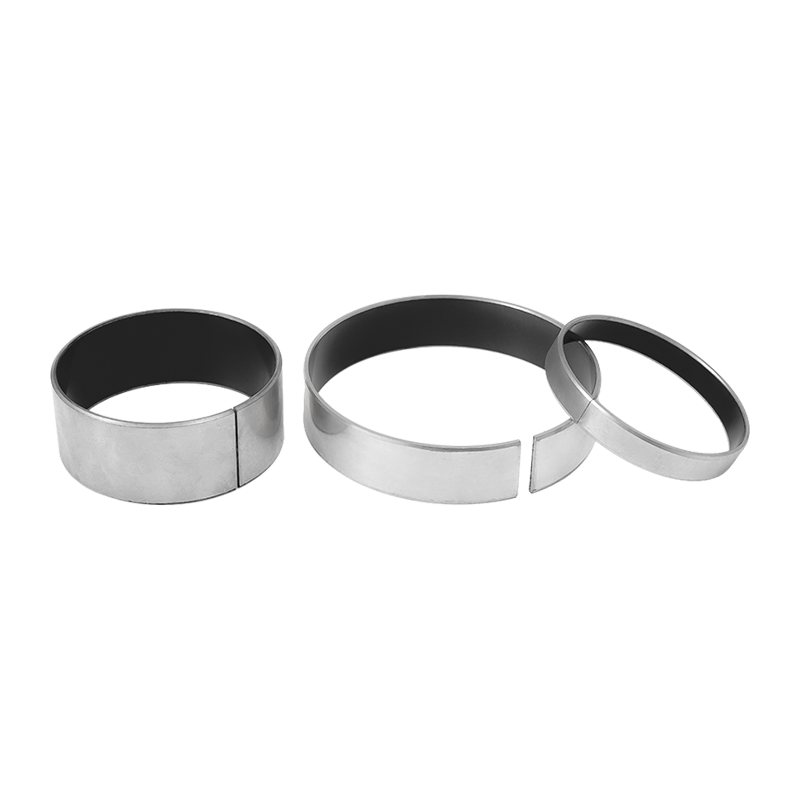 HZ10 Type 1 steel-based self-lubricating bearing Suppliers, Company - Zhejiang HHuazhou is HZ10 Type 1 steel-based self-lubricating bearing Suppliers and Company in China, Wholesale HZ10 Type 1 steel-based self-lubric...View Product →
Common Plain Bearing Failure Modes: A Quick Reference
Every failure mode leaves a distinct pattern on the bearing surface. Reading that pattern correctly is the core of bearing failure analysis.
Hidden Indicators: What the Damage Pattern Does Not Tell You
The visual pattern answers where the bearing failed and roughly how. It does not answer why. The same scoring can come from contaminated oil, a collapsed filter, or a three-second loss of lubricant flow. Reliable bearing failure analysis combines the surface pattern with oil analysis, temperature logs, and vibration trends.
Across industrial plain bearing populations, root causes distribute roughly as shown below. Lubrication deficiency dominates, and it is also the easiest category to correct.
Practical rule: If the bearing shows adhesive wear and the oil sample contains metal particles while the filter looks clean, check the filter bypass and the breather before changing the bearing geometry. Many repeat failures are contamination problems wearing a lubrication disguise.
Where Plain Bearing Failures Hurt Most
Plain bearings are not distributed evenly across industries, and the cost of failure differs by application. The estimated market distribution below explains why different customers worry about different failure modes.
In automotive and light commercial platforms, start-stop operation pushes bearings into boundary lubrication thousands of times each day. In construction and agriculture, abrasive dust is the dominant threat, and repeat failures usually point to seal or filtration weaknesses. In energy applications, temperature and oil degradation lead the list.
A Practical Selection Process and the ROI of Getting It Right
When a bushing fails repeatedly, do not order an identical replacement. Work through a structured selection process so the new bearing matches the actual duty, not just the old part number.
Document
Photograph the failed part and record dimensions, hours, and oil history.
Define Duty
Calculate actual load, speed, temperature, and available lubrication.
Select Material
Choose monometallic, bimetal, self-lubricating, or boundary-lubricated construction.
Verify Fit
Confirm housing bore, shaft finish, clearance, and alignment.
Monitor
Track temperature and vibration, and review at the next service interval.
The return on this effort is measurable. A plant that cut bearing-related downtime from 12 hours to 3 hours per quarter, with a stoppage cost of $4,000 per hour, saved $36,000 per quarter before counting reduced parts usage and overtime. One correctly selected bushing is cheap; a fleet of misapplied ones is not.
For oscillating, intermittent, or start-stop positions where a hydrodynamic film never fully develops, a porous sintered copper POM-filled boundary-lubricated bearing provides a built-in solid lubricant reserve. This construction keeps the friction coefficient low even when external lubrication is sparse.
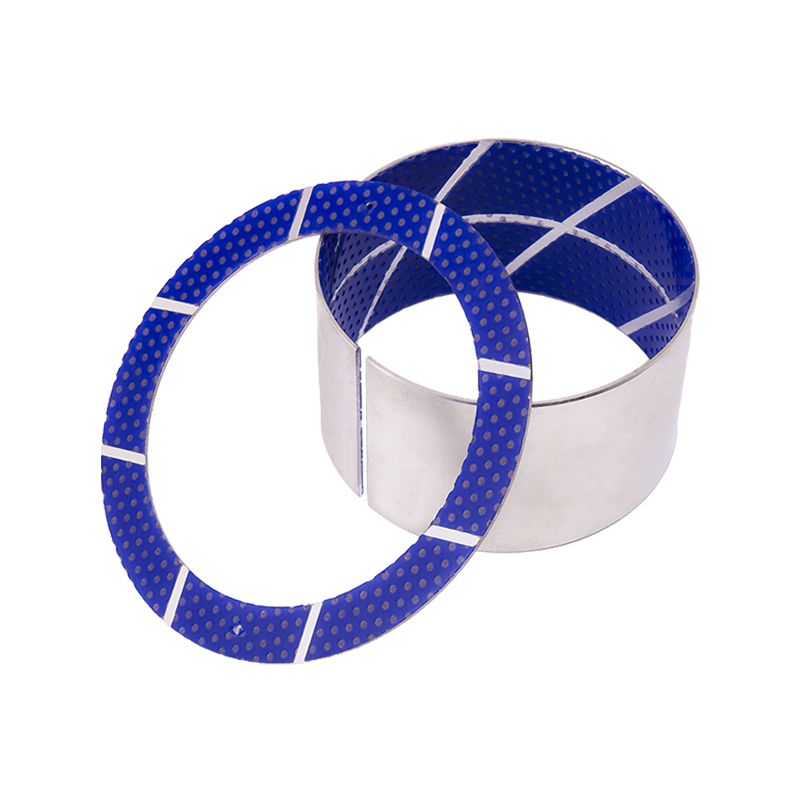 HZ2B porous sintered copper POM/filler (blue) boundary lubrication bearing SupplHuazhou is HZ2B porous sintered copper POM/filler (blue) boundary lubrication bearing Suppliers and Company in China, Wholesale HZ2B poro...View Product →
Maintenance and Compliance Recommendations
Bearing failure analysis does not end with a diagnosis. The findings must feed back into daily operation and quality systems.
- Base lubrication intervals on actual running hours and duty severity, not on a fixed calendar.
- Track bearing temperature as an early warning; a sustained 10°C rise above baseline justifies inspection.
- Control contamination at the source: check breathers, seals, and filter condition before changing parts.
- Document every failure with photos, dimensions, and operating data; this evidence supports ISO 9001 and customer audits.
- In high-load, dusty environments, specify wear-resistant graphite copper bushings
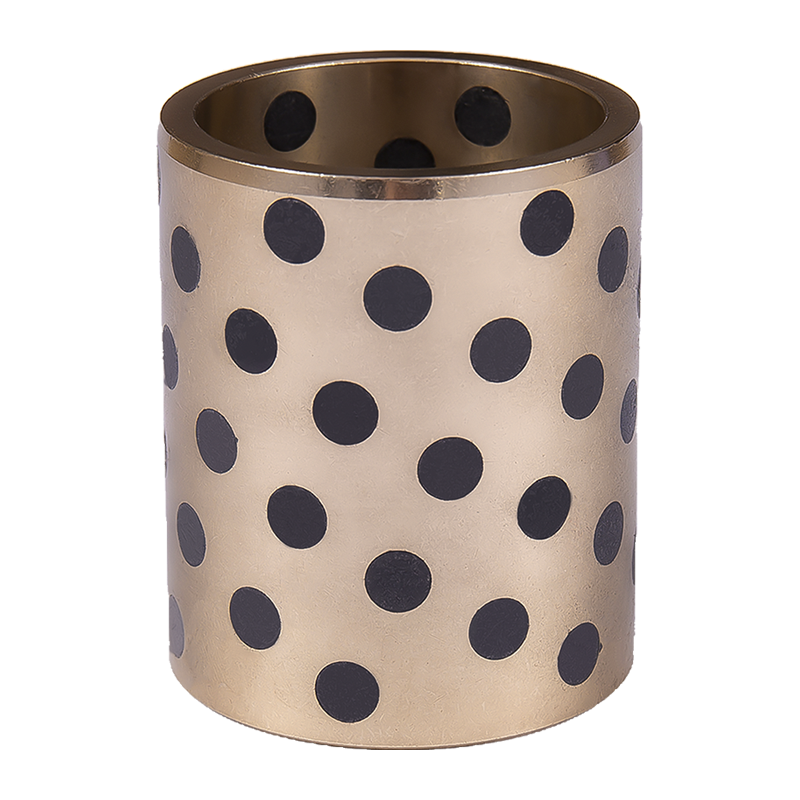 HZ-JDB Wear-resistant graphite copper bushing Suppliers, Company - Zhejiang HuazHuazhou is HZ-JDB Wear-resistant graphite copper bushing Suppliers and Company in China, Wholesale HZ-JDB Wear-resistant graphite copper ...View Product → to maintain a solid lubricant film even when abrasive particles enter the joint.
Compliance also means keeping records of material certifications and design changes. If a bearing is upgraded from a straight bronze bushing to a self-lubricating or boundary-lubricated design, the change must be traceable for quality audits and for the next failure analysis.
Bearing failure analysis is not a one-time forensic exercise; it is the feedback loop that keeps machines reliable. The bearing surface records the machine's health: load, alignment, cleanliness, and lubrication history. Learning to read that record, and acting on it, is one of the lowest-cost reliability improvements available to any maintenance organization.
When a standard catalogue solution does not fit the duty cycle, working directly with a plain bearing manufacturer that can adjust material composition, clearance, flange geometry, or lubricant type is often the fastest route to a lasting fix.