English
 русский
 Español
 عربى
عربى
A seed drill rolling through damp soil just after rain is not a glamorous test. But for a bearing in that drill, it is a harsh daily reality: dust and mud pack into seals, sharp impacts come from rocks and clods, and the shaft may sit still for weeks before rotating at full speed. While many engineers default to greased ball bearings, this habit often ends in a sealed failure. The reason is that ordinary rolling-element bearings depend on a constant film of grease that can be washed out or contaminated in exposed agricultural mounts. For this reason, leading farm equipment manufacturers now specify self-lubricating sliding bearings for bushings that must survive without frequent relubrication.
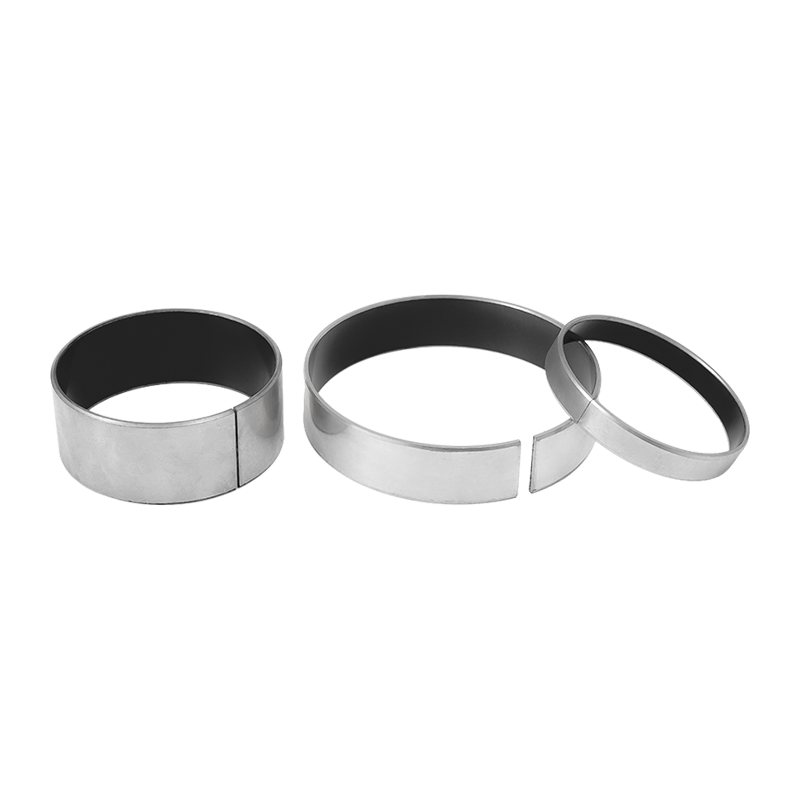 HZ10 Type 1 steel-based self-lubricating bearingHZ1O-carbon steel self-lubricating bearings used high-quality low-carbon steel plate as base, sintered porous bronze as its interlayer and the compound of PTFE and lea...View Product →
Content
- 1 How Self-Lubricating Bearings Actually Work in Agricultural Conditions
- 2 Data-Driven Comparison for Agricultural Bearing Selection
- 3 Hidden Indicators: What Actually Controls Bearing Life in the Field
- 4 Industry Application Distribution of Agricultural Bearings
- 5 Practical Selection Journey: From Machine Spec to Bearing
- 6 Maintenance and Compliance Advice for Agricultural Bearings
How Self-Lubricating Bearings Actually Work in Agricultural Conditions
A sliding bearing differs from a ball bearing because it carries load over a larger surface and does not rely on steel balls rolling in a raceway. In a self-lubricating bearing, the sliding layer or the bushing itself contains a solid lubricant such as graphite, PTFE, or a filled thermopolymer. When the shaft rotates, the solid lubricant transfers onto the shaft counterface, creating a low-friction film that remains present even after the machine stops. This is especially valuable in agricultural settings where a greased bearing can dry out during harvest lag time and then start with metal-to-metal contact.
Contamination Tolerance
The solid lubricant film is not washed away by rain or irrigation water. Dust and fine soil particles can embed in a boundary-lubricated composite surface without destroying its ability to slide.
Load and Impact Resistance
Steel-backed bronze or copper alloy bases withstand the shock loads from tillage tools and harvester screens that would otherwise flatten a thin-walled rolling bearing race.
Idle Period Comfort
A bearing that can sit for months without lubrication and then resume rotating is a real advantage in seasonal equipment. Solid lubricants do not drain or oxidize like grease.
In a complete comparison of self-lubricating vs. boundary-lubricated bearings, the practical difference is not only the lubricant but also how the bearing is manufactured. Boundary-lubricated versions use a porous bronze or steel backing filled with a thermoplastic, while fully self-lubricating versions rely on embedded graphite or PTFE.
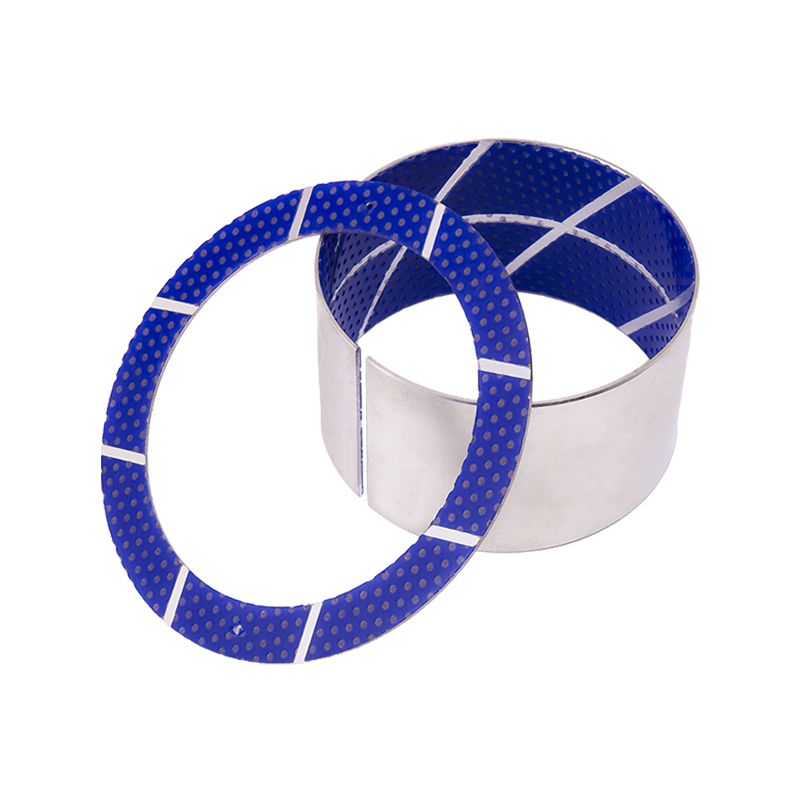 HZ2B porous sintered copper POM/filler (blue) boundary lubrication bearingApplication CharacteristicsView Product →
Data-Driven Comparison for Agricultural Bearing Selection
To make the choice practical, the table below compares typical performance of three bearing families under farm-related conditions. Values are based on published material data and field experience, not a single laboratory test.
The best choice for a harvester reel or belt tensioner is often a steel-based self-lubricating bushing because it balances load capacity and maintenance-free operation. For slow oscillating joints in a plough, a boundary-lubricated POM insert can reduce clearance and provide quiet motion. For high-temperature areas like a combine brake or exhaust-adjacent linkage, graphite copper is the more robust option.
Hidden Indicators: What Actually Controls Bearing Life in the Field
Life rating charts from bearing suppliers assume clean, well-lubricated conditions. In an agricultural environment, the actual life multiplier is shaped by edge conditions that are easy to overlook. The chart below illustrates relative sliding bearing life under increasing dust contamination, using a sealed greased ball bearing as the baseline of 1.0.
Notice that a sealed self-lubricating bushing can outperform a standard greased ball bearing even in clean conditions because it does not depend on a grease film that can be displaced by shock. The hidden variable is not only dust but also downtime: a farmer who can reschedule a bearing change after harvest instead of in the middle of it values a longer service interval more than a slightly lower coefficient of friction.
Industry Application Distribution of Agricultural Bearings
Agricultural bearing usage spans several machine categories. The pie chart below approximates the relative share of bearing consumption in equipment, based on annual production volumes of common farm machines.
For a manufacturer serving this market, the practical implication is that a single bearing type cannot cover all machines. A disc harrow requires dust-tolerant radial bushings, while a round baler needs bearings that accept high radial loads with modest vibration. Graphite copper bushings are well suited to the high-impact tillage segment, while engineering plastic or boundary-lubricated inserts work in seeding and irrigation where corrosion resistance matters more.
Practical Selection Journey: From Machine Spec to Bearing
A clear decision path helps avoid the two common mistakes in agricultural bearing sourcing: choosing too soft a material that wears quickly, or choosing a rolling bearing with inadequate sealing. Follow the sequence below.
1. Define duty cycle
Record daily operating hours, shaft speed, type of motion (continuous rotating, oscillating, or intermittent), and max radial/axial load.
2. List environmental stress
Consider dust levels, moisture, chemical fertilizers, temperature extremes, and whether the machine receives regular grease. If relubrication is not planned, choose a self-lubricating product.
3. Match material to load and speed
For high load and low speed, use a graphite copper bushing. For medium load and moderate speed with no grease, use a steel-based self-lubricating bearing. For low load and very light duty, a boundary-lubricated polymer insert is often enough.
4. Verify dimensions and mounting
Check shaft tolerance for sliding bearings, house bore, flanged shape, and any axial displacement required. A flanged bushing can replace a shaft shoulder and reduce assembly cost.
Quick ROI Rule
If a failed bearing costs one hour of combine downtime during harvest, a bearing with 30% longer life can pay for the price difference in a single season. The economic benefit is not in the bearing cost but in the avoided field labor and lost time.
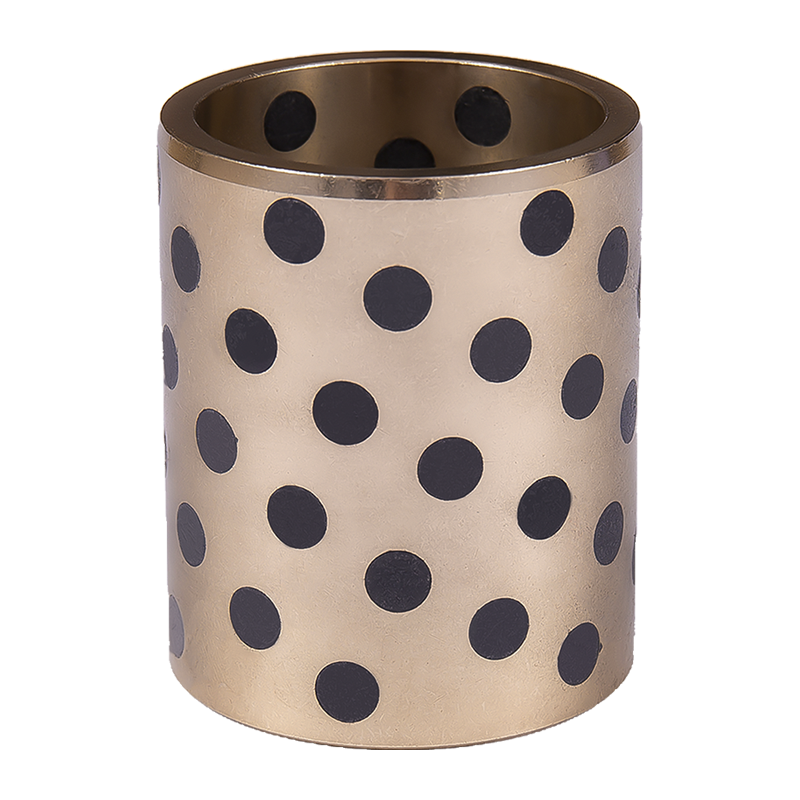 HZ-JDB Wear-resistant graphite copper bushingThis material provides a maintenance-free bearing solution, particularly for high load, intermittent of oscillating motion. Solid lubricants within a bronze combines t...View Product →
Maintenance and Compliance Advice for Agricultural Bearings
Even a self-lubricating bearing cannot be treated as indestructible. Regular inspection should focus on unusual noise, shaft play, and signs of corrosion around the housing. When installing a self-lubricating bushing, keep the assembly clean, use the correct fitting force, and chamfer the shaft to avoid scratching the sliding surface. For steel-based products, do not remove the solid lubricant layer by degreasing; the surface is designed to transfer lubricant during operation.
On the compliance side, many agricultural markets in Europe and North America are tightening requirements related to hazardous substances in lubricants and surface coatings. Choosing bearing materials with certified chemical resistance and documented performance can simplify machine approval. It is also wise to request material datasheets and test reports for temperature limits, load capacity, and dry-running coefficients from your supplier, especially when the equipment is bound for export.
Monitoring
Track shaft temperature and power draw during the first 100 hours. A sudden rise in current may indicate the bearing is binding.
Storage
Store bearings in dry, ventilated areas. Protect graphite copper sleeves from impact to prevent chipping of the graphite plugs.
Documentation
Keep material test certificates and part numbers. This helps if the machine requires after-sales support or certification.