English
 русский
 Español
 عربى
عربى
Content
What Are HZ-EP Engineering Plastic Bearings?
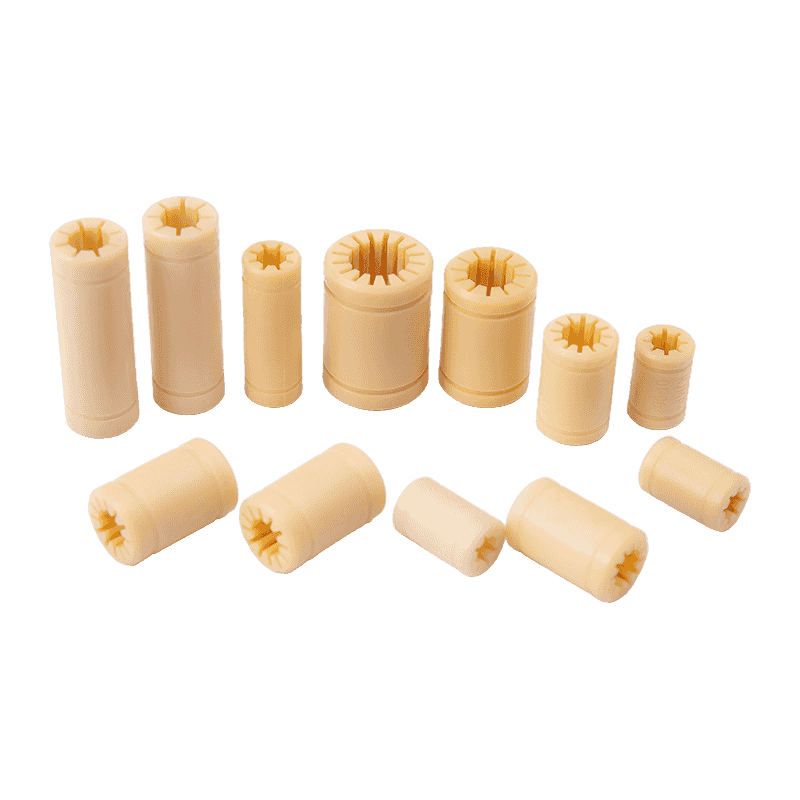
HZ-EP engineering plastic bearings are self-lubricating components crafted from high-performance thermoplastic materials through precision injection molding. Unlike conventional metal bearings, these components are manufactured as a single, compact piece, enabling complex geometries and customized designs that would be difficult or costly to achieve through traditional machining. The result is a bearing solution that combines dimensional accuracy with design flexibility, making it adaptable to a wide range of mechanical applications.
The term "engineering plastic" refers to a category of high-grade polymers—such as nylon (PA), acetal (POM), PEEK, and PTFE-filled composites—that are specifically formulated for mechanical and structural applications. These materials deliver superior mechanical strength, chemical resistance, and thermal stability compared to standard plastics, bridging the performance gap between commodity polymers and metals.
Key Performance Advantages of Plastic Bearings
HZ-EP plastic bearings are engineered to perform reliably under demanding conditions. Their advantages go well beyond simple weight reduction—they address several critical pain points in industrial and commercial bearing applications.
Self-Lubrication and Low Friction
One of the most significant benefits of HZ-EP engineering plastic bearings is their inherent self-lubricating property. The thermoplastic matrix is compounded with solid lubricants such as PTFE or graphite, which gradually release during operation to form a thin lubricating film on the contact surface. This enables dry running without external grease or oil—a major advantage in environments where lubrication is impractical, such as food processing lines, medical equipment, or sealed assemblies. Even in lubricated conditions, the already low coefficient of friction results in reduced energy consumption and less heat generation.
Corrosion Resistance in Harsh Environments
Metal bearings are vulnerable to rust and chemical degradation when exposed to water, salt spray, acids, or cleaning agents. HZ-EP plastic bearings are inherently immune to these threats. Their polymer construction resists moisture absorption, galvanic corrosion, and chemical attack, making them particularly effective in humid or saline environments such as marine equipment, outdoor machinery, food-grade conveyor systems, and wastewater treatment facilities. This corrosion resistance directly extends service life and reduces the frequency of maintenance-related downtime.
Lightweight and Cost-Effective
Engineering plastics typically weigh 50–80% less than equivalent metal components. For applications where weight matters—such as automotive components, portable medical devices, or handheld tools—this reduction translates directly into improved system efficiency. In addition, the injection molding process enables high-volume production with minimal material waste, keeping unit costs low. The elimination of secondary machining, surface treatments, and regular lubrication schedules further reduces total cost of ownership over the bearing's service life.
Noise Reduction and Smooth Operation
The viscoelastic nature of thermoplastics provides natural vibration damping that metal bearings cannot match. HZ-EP plastic bearings absorb operational vibrations and reduce acoustic emission during rotation or sliding, which is especially valuable in office equipment, consumer appliances, and medical instruments where noise is a quality concern.
HZ-EP Plastic Bearing Unit: Design and Structure
A plastic bearing unit is an integrated assembly that combines a polymer bearing with a mounting housing or flange—all molded as one piece. This one-piece construction is a defining feature of HZ-EP bearing units, offering several structural and practical benefits:
- Reduced part count: The bearing and housing are a single component, simplifying procurement and inventory management.
- Faster assembly: Pre-sized units eliminate on-site measuring, alignment work, and press-fit operations, reducing assembly time significantly.
- Compact form factor: The integration of housing and bearing into one molded unit minimizes the overall footprint, enabling use in space-constrained designs.
- Optional integrated seals: Dust lips or wipers can be molded directly into the unit to protect the bearing from contamination without additional components.
Common plastic bearing unit configurations include two-bolt flange units for conveyor guide systems, clip-in inserts for sheet metal panels, and press-fit cylindrical units for pillow block housings. These formats are widely used in packaging machinery, agricultural equipment, and light industrial OEM systems.
Material Comparison: Common Thermoplastics Used in Plastic Bearings
The performance of any plastic bearing depends heavily on the polymer selected. HZ-EP bearings can be produced from a range of engineering thermoplastics depending on load, speed, temperature, and chemical exposure requirements.
| Material | Max Temp. | Key Strength | Typical Use |
| Nylon (PA66) | ~110°C | High mechanical strength, good wear resistance | Industrial machinery, automotive |
| Acetal (POM) | ~90°C | Low friction, dimensional stability | Precision equipment, consumer products |
| PEEK | ~250°C | High-temp & chemical resistance | Medical devices, aerospace, chemical plants |
| PTFE Composite | ~200°C | Lowest friction, maintenance-free | Food processing, sealed assemblies |
Primary Application Areas
HZ-EP engineering plastic bearings serve a broad spectrum of industries, owing to their versatility and robust mechanical properties. Key application areas include:
- Automotive components: Interior actuators, HVAC systems, sunroof mechanisms, and seat adjustment assemblies benefit from the lightweight and noise-damping characteristics of plastic bearings.
- Industrial machinery: Conveyor guide systems, packaging lines, and textile equipment use plastic bearing units for their corrosion resistance and maintenance-free operation.
- Medical devices: Diagnostic equipment, surgical tools, and rehabilitation devices require bearings that are non-magnetic, sterilizable, and lightweight—properties that HZ-EP materials deliver reliably.
- Food and beverage processing: Washdown environments demand materials that resist corrosion, tolerate cleaning chemicals, and operate without contaminating lubricants—all hallmarks of HZ-EP plastic bearings.
- Marine and outdoor equipment: Salt air and constant moisture exposure make metal bearings a liability. Fully polymer construction eliminates rust and extends service intervals dramatically.
How to Select the Right HZ-EP Plastic Bearing
Selecting the correct plastic bearing for your application requires evaluating several operating parameters simultaneously. Relying on a single metric—such as load capacity alone—often leads to premature failure or unnecessary overengineering. Consider the following selection criteria:
- Load type and magnitude: Distinguish between radial, axial, and combined loads. Engineering plastics handle moderate loads well but may require metal-backed composite designs for heavy-duty applications.
- Operating speed: Plastic bearings perform optimally at low to moderate speeds. High PV (pressure × velocity) values generate heat that can degrade polymer performance. Always verify PV ratings with the manufacturer.
- Temperature range: Standard engineering plastics like PA and POM are suitable up to approximately 100–110°C. For higher temperatures, specify PEEK or high-performance grades with appropriate fillers.
- Chemical environment: Identify all chemicals, solvents, and cleaning agents the bearing will contact. PTFE composites and PEEK offer the broadest chemical resistance, while nylon may absorb moisture and swell in certain conditions.
- Lubrication availability: If relubrication is impractical—due to location, contamination risk, or maintenance access—choose a self-lubricating compound grade to ensure dry-run capability.
When in doubt, consult with the bearing supplier's technical team. HZ-EP's injection molding flexibility means that custom geometries, material grades, and integrated features like snap-fit clips or mounting bosses can often be incorporated directly into the bearing unit design—eliminating the need for costly secondary components and simplifying the final assembly.