English
 русский
 Español
 عربى
عربى
Content
- 1 What Is the HZ-800 Bimetal Composite Bearing?
- 2 Material Characteristics That Define HZ Bimetallic Bearing Performance
- 3 The Fundamental Lubrication Requirement for HZ Bimetallic Bearings
- 4 Three Lubrication Designs for Different Operating Conditions
- 5 Lubrication Design Summary by Application Type
- 6
- 7 Installation and Dimensional Considerations for HZ-800 Bearings
What Is the HZ-800 Bimetal Composite Bearing?
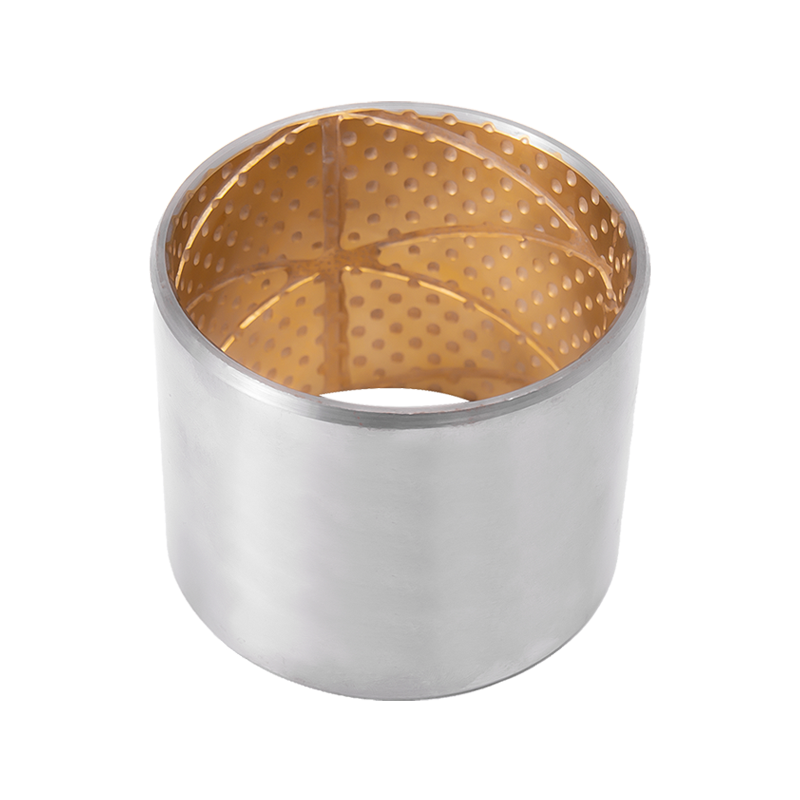
The HZ-800 bimetal composite bearing is a high-performance plain bearing solution engineered through a metallurgical bonding process that permanently joins two distinct metal layers into a single, unified structural component. The outer layer — typically a steel backing — provides the mechanical strength and dimensional rigidity needed to withstand press-fit installation forces and the structural loads transmitted through the bearing housing. The inner functional layer, composed of a carefully formulated bearing alloy such as lead bronze, tin bronze, or aluminum-based alloy, delivers the tribological properties — low friction, good conformability, and adequate hardness — required for reliable operation against a rotating or sliding steel shaft.
This bimetallic architecture gives the HZ-800 bimetal composite bearing a decisive advantage over single-material alternatives. A plain steel bush lacks the surface compatibility and seizure resistance needed to run against a steel shaft under load; a solid bronze bearing, while tribologically capable, is costly and adds unnecessary material weight. The HZ bimetallic construction resolves this trade-off by placing the right material exactly where it is needed — structural steel where strength is required, bearing alloy where the tribological interface occurs — producing a component that is simultaneously stronger, lighter, and more economical than either material alone could achieve.
Material Characteristics That Define HZ Bimetallic Bearing Performance
The performance envelope of any HZ bimetal composite bearing is determined by the specific alloy composition of its bearing layer, the quality of the metallurgical bond between the two layers, and the precision of the finished bore and outer diameter dimensions. HZ-800 grade bearings are formulated to deliver a balanced combination of load capacity, fatigue strength, and thermal conductivity that positions them as versatile solutions for a wide range of mechanical applications — from slow-moving vehicle suspension components to high-speed rotating machinery in industrial drive systems.
The bearing alloy layer in HZ-800 bimetal composite bearings exhibits several critical tribological properties that underpin reliable operation. Good embeddability allows fine contaminant particles that enter the bearing clearance to become embedded in the soft alloy surface rather than circulating and causing abrasive damage to both the shaft and bearing surfaces. Conformability enables the bearing surface to micro-deform slightly under load, compensating for minor shaft misalignment and geometric imperfections that would otherwise concentrate stress and accelerate surface fatigue. The alloy's compatibility with steel shafts minimizes the risk of adhesive wear and seizure even under marginal lubrication conditions — a property that proves particularly valuable during the critical start-up phase when the full hydrodynamic oil film has not yet been established.
The Fundamental Lubrication Requirement for HZ Bimetallic Bearings
Due to the characteristics of HZ bimetallic bearing materials, HZ bimetallic bearings must work in an oil-lubricated environment. This is not an optional operating condition but a fundamental design requirement that must be respected throughout the specification, installation, and maintenance of any machine incorporating these bearings. Unlike self-lubricating sintered bronze bearings or polymer plain bearings that carry lubricant within their own structure, HZ-800 bimetal composite bearings rely on an externally supplied lubricant film to separate the bearing alloy surface from the shaft surface during operation.
When a continuous lubricant film is present, it performs several critical functions simultaneously: it physically separates the two metallic surfaces, eliminating direct metal-to-metal contact and the friction and wear that would result; it carries away heat generated by the residual friction at the interface, preventing thermal buildup that could soften the bearing alloy and reduce its load capacity; and it flushes away wear particles and contaminants that might otherwise accumulate at the bearing surface and initiate abrasive wear. Operating an HZ bimetal composite bearing without adequate lubrication — even briefly — risks rapid surface damage, dimensional loss, and ultimately catastrophic seizure of the shaft within the bearing bore.
Three Lubrication Designs for Different Operating Conditions
According to different application scenarios, HZ bimetal composite bearings can generally be designed for three lubrication conditions. Each lubrication design is matched to the speed, load, and duty cycle characteristics of the specific application to ensure that an adequate lubricant film is maintained at the bearing interface throughout the full range of operating conditions the machine will encounter in service. Selecting the correct lubrication design at the engineering stage is one of the most important decisions in any application involving the HZ-800 bimetal composite bearing.
Grease Lubrication for Low-Speed Applications
In low-speed motion scenarios, HZ bimetal composite bearings can be designed for grease lubrication — grease is applied to the bearing surface during assembly, and then grease is regularly added during use through a grease nipple or lubrication port integrated into the housing. Grease lubrication is well suited to low-speed applications because grease does not require a pressurized supply system, is retained at the bearing interface without the drainage losses that fluid oil experiences under gravity, and provides a degree of protection against ingress of external contaminants such as dirt, dust, and water.
Typical low-speed application scenarios where grease-lubricated HZ-800 bimetal composite bearings are specified include automobile balance bridges, spring steel plates, brake shoes, steering knuckles, punch guides, bulldozer driving wheels, and driven wheels. In these applications, shaft velocities are low enough that a full hydrodynamic oil film cannot be sustained, and the bearing must operate under mixed or boundary lubrication conditions where the grease film provides the primary surface protection. The relubrication interval must be carefully determined based on operating temperature, bearing load, shaft speed, and environmental contamination levels to ensure that fresh grease reaches the bearing surface before the initial charge is depleted or degraded.
Oil Cup Lubrication for Medium-Speed Applications
In medium-speed motion scenarios, HZ bimetal composite bearings can be designed to be equipped with oil cup lubrication — a system in which a small reservoir of lubricating oil is mounted above the bearing and feeds oil to the bearing surface through a metered orifice, wick, or drip feed mechanism. Oil cup lubrication delivers a continuous, controlled supply of fresh fluid oil to the bearing interface, providing better film formation and heat dissipation than grease while avoiding the complexity and cost of a fully pressurized forced-feed lubrication system.
Medium-speed applications that benefit from oil cup lubrication on HZ-800 bimetal composite bearings include connecting rods, punching and shearing machine tool shafts, and conveyor wheels. In these applications, shaft surface velocities are high enough to generate a partial hydrodynamic oil film under favorable load conditions, and the continuous oil supply from the cup ensures that the film is replenished as it is displaced from the bearing clearance by shaft rotation and gravity drainage. The oil cup reservoir must be checked and refilled at regular maintenance intervals, and the feed rate adjusted to match the bearing's consumption rate without flooding the surrounding mechanism with excess oil.
Oil Immersion Lubrication for High-Speed Applications
In high-speed motion scenarios, HZ bimetal composite bearings can be designed for oil immersion lubrication — where the bearing operates partially or fully submerged in a circulating oil bath or is supplied with pressurized oil through dedicated drillings in the shaft or housing. Oil immersion lubrication provides the highest level of lubricant film protection, the most effective heat removal, and the best flushing action against wear debris, making it the appropriate choice for the most demanding HZ-800 bimetal composite bearing applications.
High-speed applications requiring oil immersion lubrication include gear boxes, oil pumps, oil cylinders, engines, and clutches — all environments where shaft velocities are sufficient to generate full hydrodynamic oil films under design load, provided that oil of the correct viscosity is supplied at adequate pressure and flow rate. In engine and gearbox applications particularly, the lubrication system is typically a closed-loop pressurized circuit incorporating an oil pump, filter, cooler, and pressure relief valve that maintains precise oil pressure and temperature at each bearing location throughout the full range of operating speeds and loads the machine encounters.
Lubrication Design Summary by Application Type
| Speed Category | Lubrication Method | Typical Applications | Key Maintenance Action |
| Low Speed | Grease lubrication | Balance bridges, brake shoes, steering knuckles, punch guides, bulldozer wheels | Periodic regreasing at specified intervals |
| Medium Speed | Oil cup lubrication | Connecting rods, machine tool shafts, conveyor wheels | Regular oil cup refilling and feed rate adjustment |
| High Speed | Oil immersion lubrication | Gear boxes, oil pumps, oil cylinders, engines, clutches | Oil pressure, temperature, and filter condition monitoring |
Installation and Dimensional Considerations for HZ-800 Bearings
Correct installation practice is as critical to HZ-800 bimetal composite bearing performance as proper lubrication design. The bearing must be pressed into its housing using a suitable press tool that applies force uniformly across the bearing's end face — never through the bore — to avoid distorting the bearing shell and closing the bore diameter below its specified dimension. The interference fit between the bearing outer diameter and the housing bore is carefully calculated to ensure that the bearing is held securely against rotation in the housing under all operating load conditions while not over-stressing the housing material or distorting the bearing alloy layer.
After installation, the bearing bore should be measured to confirm that press-fit deformation has not reduced the bore diameter below the minimum clearance specification relative to the shaft diameter. Insufficient running clearance restricts oil film formation, increases operating temperature, and accelerates wear; excessive clearance reduces load-carrying capacity and allows shaft deflection that generates impact loading at the bearing edges. For the HZ-800 bimetal composite bearing to deliver its rated performance across its full designed service life, the combination of correct interference fit, verified running clearance, appropriate shaft surface finish, and properly designed lubrication must all be in place from the first moment of operation.