English
 русский
 Español
 عربى
عربى
Content
- 1 Understanding SF1 Self-Lubricating Bearings
- 2 Core Material Composition and Its Benefits
- 3 Load Capacity and Wear Resistance Advantages
- 4 Temperature and Environmental Resistance
- 5 Comparative Durability Benefits
- 6 Material Selection Guidelines for Optimal Performance
- 7 Performance Comparison Table
- 8 Conclusion
Understanding SF1 Self-Lubricating Bearings
SF1 self-lubricating bearings are engineered to operate without the need for additional lubrication, making them ideal for applications where maintenance access is limited or continuous lubrication is impractical. These bearings rely on advanced material compositions that combine a solid polymer matrix with embedded lubricating fillers, providing low friction, high wear resistance, and long service life under a variety of operating conditions.
The selection of materials for SF1 bearings directly affects their durability, load-bearing capacity, temperature resistance, and compatibility with other components. Understanding these material characteristics is critical for choosing the right bearing for specific industrial or mechanical applications.
Core Material Composition and Its Benefits
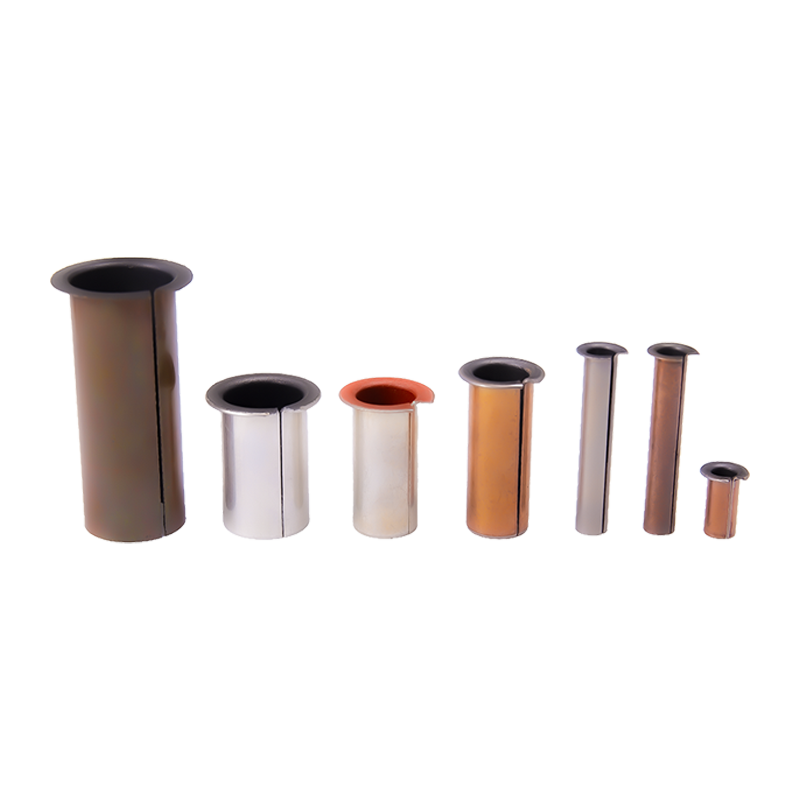
SF1 bearings are typically composed of high-performance thermoplastics reinforced with solid lubricants such as PTFE or graphite. The polymer matrix provides structural strength and flexibility, while the embedded lubricants reduce friction and prevent wear on sliding surfaces. This combination allows SF1 bearings to maintain smooth motion under varying loads and speeds without the need for external lubrication.
The polymer selection also contributes to chemical resistance, enabling the bearing to operate in environments exposed to oils, solvents, or mild acids without degradation. This makes SF1 bearings suitable for both industrial machinery and automotive components where exposure to fluids is common.
Load Capacity and Wear Resistance Advantages
Material composition significantly affects the load-bearing and wear characteristics of SF1 bearings. Reinforced thermoplastics distribute stress evenly across the bearing surface, minimizing deformation under high loads. The embedded solid lubricants reduce frictional heat generation and surface wear, enhancing the bearing's lifespan even under continuous or oscillating motion.
These properties make SF1 self-lubricating bearings particularly advantageous in applications such as linear guides, conveyor systems, and rotary shafts, where long-term reliability and minimal maintenance are essential.
Temperature and Environmental Resistance
SF1 bearings are designed to maintain performance across a wide range of operating temperatures. The thermoplastic matrix offers thermal stability, while the solid lubricants retain low-friction properties even at elevated temperatures. This allows SF1 bearings to function in both cold storage environments and high-temperature industrial processes.
Additionally, SF1 bearings exhibit excellent resistance to corrosion, moisture, and chemical exposure. Unlike metal bearings that may require coatings or treatments to resist environmental degradation, SF1 bearings inherently withstand harsh operating conditions without losing mechanical integrity.
Key environmental performance features
- High resistance to oxidation and corrosion
- Stable friction and wear performance under temperature fluctuations
- Resistance to common industrial chemicals and solvents
Comparative Durability Benefits
Compared to conventional metal or bronze bearings, SF1 self-lubricating bearings offer several durability advantages. The combination of polymer flexibility and embedded lubricants reduces the risk of metal-to-metal contact, which is a primary source of wear in traditional bearings. This reduces maintenance frequency and extends operational lifespan.
Moreover, the absence of external lubrication eliminates the risks associated with lubricant contamination, over-lubrication, or lubricant breakdown. SF1 bearings maintain consistent performance without the need for regular inspection or relubrication, making them particularly suitable for enclosed or hard-to-access equipment.
Material Selection Guidelines for Optimal Performance
When selecting SF1 bearings, it is important to consider operational load, speed, temperature range, and environmental conditions. Material grade, reinforcement type, and solid lubricant composition should align with the application requirements to ensure maximum durability and performance.
For example, bearings intended for high-load applications may require a higher percentage of polymer reinforcement or graphite fillers, while those used in corrosive environments may prioritize chemical-resistant polymer matrices. Proper material selection ensures that SF1 bearings deliver consistent low-friction performance over their intended lifespan.
Performance Comparison Table
| Property | Conventional Metal Bearings | SF1 Self-Lubricating Bearings |
| Lubrication Requirement | Regular external lubrication | None (self-lubricating) |
| Wear Resistance | Medium; depends on lubrication | High; embedded lubricants reduce friction |
| Temperature Range | Moderate; may require cooling | Wide; retains performance under heat/cold |
| Maintenance | High; periodic inspection and relubrication | Low; maintenance-free operation |
Conclusion
SF1 self-lubricating bearings combine carefully selected polymer matrices with embedded solid lubricants to deliver high durability, low friction, and reliable performance across a wide range of applications. Material selection plays a pivotal role in determining the bearing's load capacity, wear resistance, temperature tolerance, and chemical resistance. By choosing the appropriate SF1 bearing material for specific operating conditions, engineers and manufacturers can achieve long-term maintenance-free operation and improved machinery efficiency.