English
 русский
 Español
 عربى
عربى
Content
- 1 What Are JDB Solid-Inlaid Self-Lubricating Bearings?
- 2 HZ-1 Series: Material Construction and Layer Functions
- 3 Key Performance Properties of JDB Self-Lubricating Bearings
- 4 Performance Specifications at a Glance
- 5 Where JDB Solid-Inlaid Self-Lubricating Bearings Are Used
- 6 Selection and Installation Guidance for Engineers
What Are JDB Solid-Inlaid Self-Lubricating Bearings?
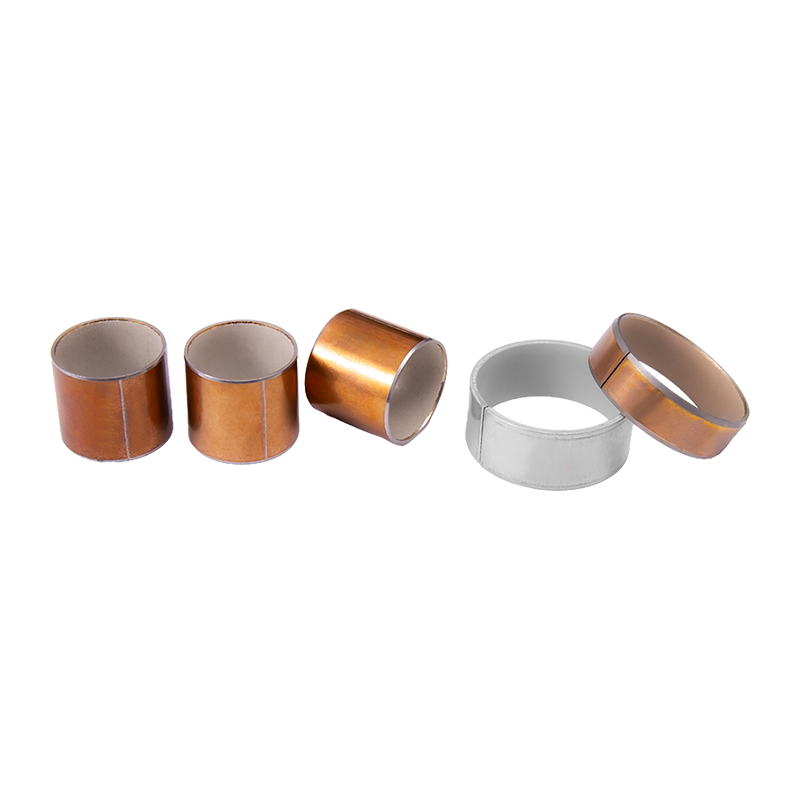
JDB solid-inlaid self-lubricating bearings represent a mature and highly engineered category of plain bearing technology, designed specifically for applications where conventional oil or grease lubrication is impractical, unreliable, or entirely impossible. Unlike rolling element bearings that depend on recirculating lubricant films, JDB bearings incorporate solid lubricating materials directly into the bearing structure itself — eliminating the need for external lubrication systems while maintaining consistent, low-friction performance throughout the component's service life. This makes them a preferred solution in sliding parts of various machines where maintenance access is limited, contamination is a concern, or operating conditions make periodic re-lubrication unsafe or economically prohibitive.
The HZ-1 series is a representative product line within the JDB solid-inlaid self-lubricating bearing category, engineered to deliver a balanced combination of structural strength, surface lubricity, and long-term dimensional stability. Understanding how these bearings are constructed — and why each material layer serves a specific function — is essential for engineers and procurement specialists selecting bearing solutions for demanding sliding contact applications.
HZ-1 Series: Material Construction and Layer Functions
The HZ-1 series products are built on a three-layer composite architecture, with each layer contributing distinct mechanical or tribological properties to the finished bearing. This layered construction is what distinguishes solid-inlaid self-lubricating bearings from simpler single-material bushings, and it is the primary reason they outperform conventional plain bearings in maintenance-free and high-load sliding applications.
Base Layer: High-Quality Low-Carbon Steel
The foundation of each HZ-1 bearing is a substrate of high-quality low-carbon steel. This base provides the structural backbone of the component — delivering the compressive strength, dimensional rigidity, and machinability required for precision installation into housings and bearing seats. Low-carbon steel is selected over higher-carbon grades because it offers an optimal balance of toughness and ductility, resisting cracking under impact loads while maintaining the tight dimensional tolerances necessary for reliable fit and function. The steel base also provides a stable platform for the sintering process applied to the intermediate layer.
Intermediate Layer: Sintered Spherical Bronze Powder
Bonded to the steel substrate through a controlled sintering process, the intermediate layer consists of spherical bronze powder fused into a porous matrix. Sintering at elevated temperatures creates metallurgical bonds between the bronze particles and the steel surface, producing a layer with high mechanical integrity and an open, interconnected pore structure. This porosity is functionally critical — it creates the physical anchor points and mechanical interlocking surfaces that allow the surface lubricating layer to adhere securely and resist displacement under load and motion. The bronze matrix also contributes inherent corrosion resistance and provides a degree of load-bearing capacity at the interface between the steel core and the sliding surface.
Surface Layer: PTFE and Lead Mixture
The working surface of HZ-1 series JDB solid-inlaid self-lubricating bearings is formed by rolling a precisely formulated mixture of polyethylene (PTFE) and lead into the porous bronze matrix. PTFE — polytetrafluoroethylene — is one of the lowest-friction solid materials known to engineering, with a static coefficient of friction as low as 0.04 against steel in certain conditions. Lead acts as a co-lubricant and helps to densify the surface layer, improving its resistance to extrusion under compressive load and enhancing conformability to the mating shaft surface during the running-in phase. Together, these materials produce a sliding surface that is self-replenishing under light abrasion, consistently lubricious, and capable of transferring a thin transfer film to the shaft surface that further reduces friction over time.
Key Performance Properties of JDB Self-Lubricating Bearings
The composite construction of HZ-1 series bearings produces a performance profile that addresses the most common failure modes in sliding bearing applications. Each property listed below is a direct outcome of the material selection and manufacturing process described above, not an incidental characteristic.
- Self-lubrication: The PTFE/lead surface layer continuously supplies solid lubricant to the sliding interface without any external grease or oil input, making these bearings truly maintenance-free in normal operating conditions.
- Wear resistance: The hardened bronze matrix and dense PTFE surface resist abrasive wear, ensuring dimensional stability and consistent clearance over extended service periods even under sustained load and motion.
- Low friction coefficient: PTFE's inherently low surface energy produces a friction coefficient significantly below that of bronze or iron plain bearings operating with conventional lubricants, reducing drive power requirements and heat generation at the sliding interface.
- Good running-in performance: During the initial operational period, the PTFE/lead layer conforms progressively to the shaft surface, optimizing contact geometry and establishing the transfer film that underpins long-term low-friction performance.
- Low noise: The solid lubricant interface eliminates the stick-slip behavior and fluid film instabilities that generate noise and vibration in conventionally lubricated bearings, making JDB bearings well-suited to precision and acoustically sensitive machinery.
Performance Specifications at a Glance
| Parameter | HZ-1 Series Typical Value |
| Base Material | High-quality low-carbon steel |
| Intermediate Layer | Sintered spherical bronze powder |
| Surface Layer | PTFE + Lead mixture |
| Friction Coefficient | 0.03 ~ 0.12 (dry) |
| Max Static Load | Up to 250 N/mm² |
| Operating Temperature | -40℃ ~ +280℃ |
| Lubrication Requirement | None (self-lubricating) |
Where JDB Solid-Inlaid Self-Lubricating Bearings Are Used
HZ-1 series JDB solid-inlaid self-lubricating bearings are widely used in the sliding parts of various machines across a broad range of industries. Their maintenance-free operation, combined with reliable performance under sustained load, makes them particularly valuable in assemblies where bearing replacement is difficult, costly, or disruptive to production continuity.
Industrial Machinery and Manufacturing Equipment
In presses, injection molding machines, die-casting equipment, and conveyor systems, JDB bearings are used in guide pillars, ejector pins, linkage pivot points, and linear slide assemblies. These positions are frequently subject to high compressive loads combined with oscillating or slow continuous motion — conditions where oil-film bearings lose hydrodynamic support and where grease fittings are impractical to maintain on production schedules. The self-lubrication property of the HZ-1 series ensures uninterrupted operation without scheduled lubrication stops.
Agricultural and Construction Machinery
Tractors, harvesters, excavators, and road construction equipment operate in environments where bearing positions are exposed to dust, mud, and water — contaminants that rapidly degrade conventional grease and accelerate wear in standard bronze or iron bushings. JDB solid-inlaid self-lubricating bearings resist contamination penetration at the sliding interface and do not require periodic regreasing in the field, significantly reducing maintenance costs and machine downtime in remote or demanding operating environments.
Automotive Components and Suspension Systems
Chassis pivot joints, steering linkages, suspension arm bushings, and brake mechanism pivot points in automotive applications require bearings that combine compact dimensions with long, maintenance-free service intervals. The low noise performance of HZ-1 series bearings is particularly valued in passenger vehicle applications, where NVH (noise, vibration, and harshness) targets are stringent and any bearing-generated squeal or rattle is unacceptable to end users.
Hydraulic and Pneumatic Systems
Cylinder rod guide bearings, valve actuator pivot bushings, and pump shaft supports in hydraulic and pneumatic systems benefit from the chemical inertness of PTFE, which resists degradation from hydraulic fluids, lubricating oils, and pneumatic system condensates. The wear resistance of the composite structure also ensures that dimensional clearances remain stable over millions of actuation cycles, maintaining system efficiency and preventing internal leakage.
Selection and Installation Guidance for Engineers
Selecting the correct JDB solid-inlaid self-lubricating bearing for a given application requires matching the bearing's load capacity, speed rating, and dimensional envelope to the operating conditions. The following practical considerations should inform the specification process:
- Load and PV value: Calculate the bearing's pressure-velocity (PV) value — the product of unit load (N/mm²) and sliding velocity (m/s) — and confirm it falls within the rated PV limit for the HZ-1 series to ensure the surface layer does not overheat or extrude.
- Shaft hardness: Mating shafts should have a minimum hardness of HRC 45 to prevent shaft wear from the running-in process and ensure the PTFE transfer film forms correctly on a hard, smooth counterface.
- Housing fit: Install bearings with a controlled interference fit into the housing bore to prevent rotation of the outer surface. Pressing should be performed with a parallel press tool, never by striking the bearing face directly.
- Running-in period: Allow for a brief running-in phase at reduced load (approximately 30% of operational load) during initial operation to permit the PTFE/lead surface layer to conform to the shaft and establish the lubricating transfer film.
- Temperature monitoring: Although HZ-1 series bearings operate reliably across a wide temperature range, monitoring bearing temperature during commissioning confirms that PV conditions are within specification and that heat dissipation through the housing is adequate.
JDB solid-inlaid self-lubricating bearings of the HZ-1 series offer a technically robust and economically sound solution for the sliding parts of various machines where maintenance-free performance, low friction coefficient, good wear resistance, and reliable running-in behavior are essential requirements. Their composite architecture — combining the structural strength of low-carbon steel, the bonding capability of sintered spherical bronze powder, and the tribological excellence of a PTFE and lead surface layer — makes them one of the most versatile and dependable plain bearing solutions available to modern mechanical engineers.