English
 русский
 Español
 عربى
عربى
Content
- 1 What Makes HZ-10 Self-Lubricating Bearings Different
- 2 The Role of PTFE and Lead in the Sliding Surface
- 3 Low Friction Coefficient: What the Numbers Mean in Practice
- 4 Dry Sliding Performance and When It Matters Most
- 5 Key Performance Properties of HZ-1 Series Bearings
- 6 Typical Applications in Machine Sliding Parts
- 7 Specifying HZ-10 Bearings: Key Parameters to Evaluate
What Makes HZ-10 Self-Lubricating Bearings Different
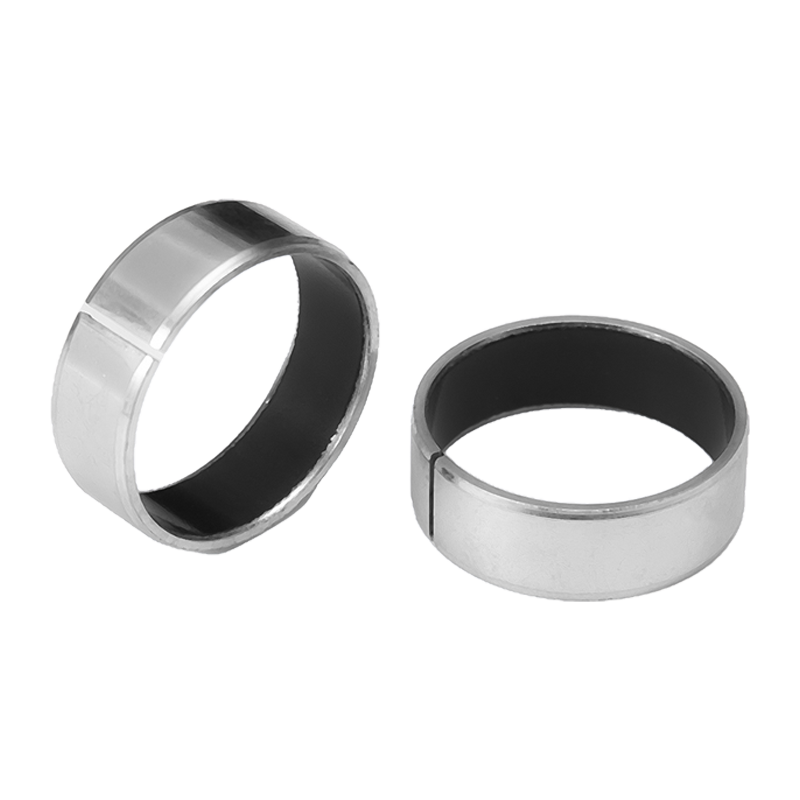
In the landscape of plain bearing technology, HZ-10 self-lubricating bearings represent a specific and well-engineered solution for applications where external lubrication is impractical, inconvenient, or impossible. The HZ-1 series — of which HZ-10 is a core product — is constructed using a precise three-layer composite architecture: a high-quality low-carbon steel backing, an intermediate layer of sintered spherical bronze powder, and a surface layer rolled with a homogeneous mixture of polytetrafluoroethylene (PTFE) and lead. This layered construction is not incidental — each layer serves a distinct mechanical role, and together they produce a bearing that delivers consistent, reliable performance across a wide range of industrial sliding applications.
The low-carbon steel base provides the structural rigidity and load-bearing capacity needed for machine sliding parts under continuous stress. The sintered bronze intermediate layer creates a metallurgical bond between the steel substrate and the PTFE-lead surface, dramatically increasing the adhesion strength of the sliding layer while also contributing to the thermal conductivity of the assembly. Without this bronze interlayer, PTFE coatings applied directly to steel would delaminate under cyclic loading. The spherical powder morphology maximizes surface contact area between layers, producing a bond that resists both static and dynamic delamination forces.
The Role of PTFE and Lead in the Sliding Surface
The surface composition of HZ-10 self-lubricating bearings is the primary reason these components qualify as true dry sliding bearings. PTFE — commonly known as Teflon — is one of the most chemically inert and mechanically slippery solid materials known to engineering. Its molecular structure consists of long carbon chains fully shielded by fluorine atoms, which creates an extremely low-energy surface that resists adhesion and friction. When a shaft or mating surface moves against the PTFE layer, thin transfer films of PTFE deposit onto the counterpart surface, effectively lubricating both sides of the sliding interface from within the bearing itself. This is the core mechanism of dry sliding lubrication.
Lead is incorporated into the surface mixture not as a structural material but as a secondary solid lubricant and matrix modifier. Lead fills micro-voids in the PTFE matrix, improving compressive strength and preventing the surface layer from excessively deforming under high contact pressure. It also aids in the initial running-in phase — a period during which the bearing surface and the mating shaft conform to each other microscopically, establishing stable contact geometry. HZ-10 bearings are specifically noted for their good running-in performance, which shortens the break-in period and reduces early wear rates compared to bearings relying solely on PTFE.
Low Friction Coefficient: What the Numbers Mean in Practice
One of the most cited performance attributes of HZ-10 self-lubricating bearings is their low friction coefficient. In dry sliding conditions, the coefficient of friction for PTFE-composite bearings typically falls in the range of 0.03 to 0.12, depending on load, speed, and surface finish of the counterpart. This compares favorably to unlubricated steel-on-steel contact (0.4–0.8) and even to many oil-lubricated bronze bushings under marginal lubrication conditions.
In practical terms, a low friction coefficient directly translates to reduced drive energy requirements, lower operating temperatures, and extended service life of both the bearing and the mating shaft. For machine designers, this means that actuators, motors, and drive systems can be sized more conservatively when HZ-10 bearings are specified. For maintenance engineers, it means less heat generation at sliding interfaces, which is a leading cause of premature bearing failure in conventional bushing applications.
| Bearing Type | Typical Friction Coefficient (Dry) | External Lubrication Required |
| Steel on Steel (unlubricated) | 0.40 – 0.80 | Yes |
| Bronze Bushing (oil-lubricated) | 0.05 – 0.15 | Yes |
| Sintered Oil-Impregnated Bearing | 0.08 – 0.20 | Partial |
| HZ-10 PTFE Composite (dry sliding) | 0.03 – 0.12 | No |
Dry Sliding Performance and When It Matters Most
The term dry sliding bearings refers to bearings designed to operate without any external supply of grease or oil. This is not simply a convenience feature — in many applications, external lubrication is genuinely not feasible. Food processing machinery cannot tolerate oil contamination of products. Clean-room environments in semiconductor manufacturing prohibit oil vapors near sensitive substrates. Submerged or high-humidity environments rapidly wash away conventional greases. Reciprocating or oscillating motion applications create lubrication film breakdown at motion reversals. In all of these scenarios, a dry sliding bearing based on PTFE composite technology is not just preferred — it is the only practical choice.
HZ-10 self-lubricating bearings are particularly well-suited to slow-speed, high-load sliding applications. While full-film hydrodynamic lubrication — the mechanism that makes oil-lubricated journal bearings so effective at high speeds — breaks down completely at low sliding velocities, the solid PTFE transfer film remains functional regardless of speed. This makes HZ-10 bearings reliable in applications such as hydraulic cylinder gudgeon pins, press tool guide bushings, agricultural equipment linkages, and conveyor pivot points, where shafts may oscillate through small angles at slow speeds under heavy loads.
Key Performance Properties of HZ-1 Series Bearings
The HZ-1 series, including HZ-10 self-lubricating bearings, is designed to deliver a consistent combination of performance characteristics that address the most common failure modes in sliding machine parts. These properties work together as a system rather than in isolation:
- Self-lubrication: The PTFE-lead surface continuously deposits transfer film onto mating surfaces, maintaining a lubricating layer throughout the service life of the bearing without any external intervention.
- Wear resistance: The bronze sintered interlayer and PTFE composite surface work together to distribute contact stress evenly, reducing localized wear that causes dimensional changes and shaft misalignment over time.
- Low friction coefficient: As detailed above, the PTFE surface maintains friction coefficients in the 0.03–0.12 range in dry sliding conditions, reducing energy consumption and heat generation at the interface.
- Good running-in performance: Lead in the surface matrix plasticizes the contact interface during initial operation, allowing the bearing bore and shaft surface to conform rapidly and establish a stable, low-wear contact geometry.
- Low noise: The soft PTFE-lead surface layer absorbs micro-vibrations and eliminates the stick-slip phenomenon common in dry metal-on-metal contacts, producing notably quieter operation — important in consumer equipment, office machinery, and precision instruments.
Typical Applications in Machine Sliding Parts
The HZ-10 self-lubricating bearing is characterized as suitable for the sliding parts of various machines — a broad description that encompasses a wide range of specific applications across multiple industries. Understanding where these bearings perform best helps engineers select them with confidence and avoid misapplication.
Industrial Machinery
In hydraulic and pneumatic cylinder applications, HZ-10 bearings are used as guide bushings for piston rods, where they must tolerate side loads, reciprocating motion, and the absence of positive lubrication. Their dry sliding capability eliminates the need for external lubrication ports, simplifying cylinder design and reducing maintenance intervals. Press and stamping tool guide bushings represent another high-value application, where the combination of wear resistance and low friction reduces tooling wear and improves dimensional consistency of pressed parts.
Automotive and Agricultural Equipment
Suspension linkage pivot bushings, door hinge bearings, and pedal pivot pins in automotive applications benefit from the maintenance-free nature of HZ-10 bearings. Agricultural equipment — which operates in abrasive, high-moisture field conditions — is poorly suited to grease-lubricated bushings that require frequent re-greasing. Self-lubricating bearings in tillage equipment linkages, harvester conveyor pivots, and sprayer boom joints eliminate scheduled lubrication tasks that are difficult to perform reliably in field conditions.
Light Industry and Consumer Equipment
Textile machines, printing equipment, office automation devices, and small appliances require bearings that operate quietly and cleanly without periodic oil or grease application. The low noise property of HZ-10 self-lubricating bearings — a direct result of the PTFE layer damping stick-slip and micro-vibrations — makes them well-suited to these environments. Their compact profile and ability to be pressed directly into standard housings without additional sealing or retention hardware also reduce assembly complexity and part count.
Specifying HZ-10 Bearings: Key Parameters to Evaluate
When specifying HZ-10 self-lubricating bearings for a new or retrofit application, engineers should evaluate the following parameters to confirm suitability and ensure the bearing operates within its design envelope:
- PV value (pressure × velocity): PTFE composite bearings have defined PV limits. Exceeding these limits accelerates surface wear and reduces service life. For HZ-1 series bearings, typical maximum static load is around 250 N/mm² and maximum sliding speed is around 0.5 m/s in continuous dry sliding operation.
- Shaft hardness and surface finish: Mating shafts should have a hardness of HRC 45 or higher and a surface roughness of Ra 0.4–0.8 µm. Soft or rough shaft surfaces accelerate wear of the PTFE composite layer and reduce the effectiveness of transfer film formation.
- Operating temperature: PTFE remains stable from –200°C to +260°C, giving HZ-10 self-lubricating bearings a broader thermal operating range than polymer-only alternatives. The steel and bronze structure maintains dimensional stability at temperatures well beyond the range of nylon or acetal bushings.
- Housing fit: These bearings are typically press-fit into a housing with an interference fit. Correct housing bore tolerance (usually H7) is essential — excessive clearance allows the bearing to rotate in the housing, while excessive interference can reduce bore size below specification after pressing.
By carefully matching these parameters to application requirements, engineers can confidently deploy HZ-10 self-lubricating bearings as long-life, low-maintenance solutions across the full range of machine sliding part applications for which the HZ-1 series was designed.