English
 русский
 Español
 عربى
عربى
Most engineers switching away from babbitt metal cite the same two problems: poor load capacity at elevated temperatures and frequent re-pouring cycles that drive up maintenance costs. High tin aluminum bearings — built on an AlSn20Cu alloy system — solve both. By bonding a 20% tin aluminum alloy layer to a steel backing, they deliver the conformability of white metal with fatigue strength that traditional babbitt cannot match above 40°C.
Content
What Is a High Tin Aluminum Bearing?
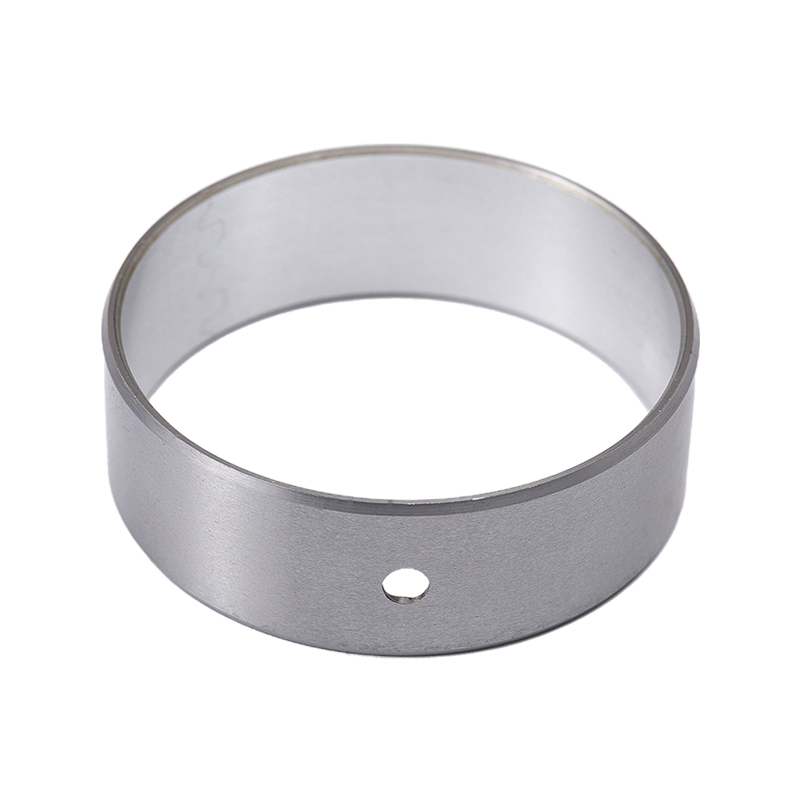
A high tin aluminum bearing is a bimetal plain bearing consisting of two bonded layers: a low-carbon steel backing that provides structural strength, and a surface layer of AlSn20Cu (aluminum-tin-copper) alloy that handles the tribological work — friction, wear, and lubrication.
The alloy designation tells you the composition: approximately 20% tin by weight, around 1% copper, and the balance aluminum. The tin phase is distributed in fine particles within the aluminum-copper matrix. Tin particles are soft and ductile — they act as a solid lubricant, conforming to minor shaft irregularities and embedding small contaminant particles before they can score the journal surface. Copper strengthens the aluminum matrix, improving fatigue resistance and keeping hardness in a useful range.
The steel-to-alloy bond is formed by rolling (pressure bonding), producing a metallurgically integrated interface with no adhesive layer. This construction is also known as JF-20 bimetal bearing material in Chinese manufacturing standards, and corresponds to the ISO 4383 alloy designation AlSn20Cu for plain bearing lining materials.
Key Technical Parameters of AlSn20Cu Bearings
The performance envelope of AlSn20Cu is defined by the following parameters. These figures represent the material's operating limits under hydrodynamic oil lubrication unless stated otherwise.
| Parameter | Value |
|---|---|
| Alloy layer material | AlSn20Cu (≈20% Sn, ≈1% Cu, balance Al) |
| Maximum dynamic load (P) | 30 N/mm² |
| Maximum static load | 100 N/mm² |
| Maximum operating temperature | 150 °C |
| Maximum sliding speed (V) | 25 m/s |
| Alloy layer hardness | HB 30–40 |
| Tensile strength | ≥200 N/mm² |
| Friction coefficient (oil lubrication) | 0.08–0.17 |
| Fatigue class (oil) | Class 10⁵ cycles |
The alloy surface can be machined to incorporate oil grooves, oil holes, and lubricating indentations, allowing the bearing to retain oil film in demanding start-stop or oscillating duty cycles. No electroplated overlay is required, which simplifies manufacturing and eliminates the risk of overlay fatigue in high-load zones.
Performance Advantages Over Traditional Bearing Materials
High tin aluminum bearings are specifically engineered to replace babbitt alloy (white metal) and, in many cases, lead-bronze bimetal. The comparison below covers the axes that matter most in selection decisions.
| Property | AlSn20Cu | Babbitt (SnSb) | Lead-Bronze |
|---|---|---|---|
| Max operating temp. | 150 °C | ~100 °C | 180–200 °C |
| Fatigue strength | Medium-high | Low | High |
| Wear resistance | Good | Poor–Fair | Good |
| Corrosion resistance | Excellent | Fair | Fair |
| Overlay required? | No | No | Often yes |
| RoHS compliance | Yes | Lead-free grades only | No (lead content) |
| Cost | Low–Medium | Low | Medium–High |
Against babbitt, the AlSn20Cu bearing wins on every structural dimension: fatigue strength is 35–45% higher, wear life is longer, and the steel backing eliminates the risk of bulk alloy creep under sustained load. Against lead-bronze, it offers comparable wear resistance without the RoHS concerns associated with lead content — a significant regulatory advantage for machinery exported to the EU, North America, or markets enforcing the European End-of-Life Vehicle Directive.
One practical benefit that rarely appears in datasheets: AlSn20Cu bearings can be used directly off the machine without a galvanic overlay. This reduces supply chain complexity and eliminates a failure mode — overlay delamination — that affects some lead-bronze designs under high cyclic loading.
For applications requiring lead-bronze bimetal composite bearings under continuous oil lubrication, higher temperature ratings may still make that material the right call. But for medium-load, moderate-speed applications where corrosion resistance and environmental compliance are priorities, AlSn20Cu is the cleaner choice.
Typical Application Scenarios
The combination of medium-to-high fatigue strength, excellent corrosion resistance, and reliable oil-film retention makes high tin aluminum bearings a strong fit across several machinery categories.
- Internal combustion engines (small to medium power): Main bearing shells and connecting-rod bearings in gasoline and diesel engines where moderate load and reliable start-up lubrication matter. AlSn20Cu handles the cyclic fatigue of combustion loads better than babbitt at operating temperatures above 80°C.
- Air compressors: Reciprocating compressors subject bearings to alternating loads and boundary lubrication during startup. The self-lubricating tin phase reduces wear during these critical phases.
- Refrigeration and HVAC compressors: Refrigerant atmospheres are chemically aggressive. AlSn20Cu's corrosion resistance outperforms lead-containing alloys in the presence of refrigerant vapor and moisture.
- Railway traction motors and auxiliary drives: High shock loads and long maintenance intervals favor a bearing material with genuine fatigue resistance — a category where babbitt falls short.
- Hydraulic pumps and gear pumps: High rotational speeds combined with intermittent pressure spikes match the speed limit and load envelope of AlSn20Cu well.
- Agricultural and construction machinery: Environments with dust ingestion and variable lubrication quality benefit from the alloy's embeddability — its ability to absorb small particles into the soft tin matrix before they damage shaft journals.
For applications involving primarily axial loads rather than radial loads, AlSn20Cu thrust washers for axial load management follow the same material system and are available in matched configurations.
How to Select the Right High Tin Aluminum Bearing
Three variables drive the selection decision: load, speed, and lubrication regime. Getting these right means the bearing runs within its material envelope; getting them wrong accelerates wear regardless of alloy quality.
Load: AlSn20Cu handles dynamic loads up to 30 N/mm² and static loads up to 100 N/mm². If your application regularly exceeds 30 N/mm² dynamic load, consider a lead-bronze or steel-bronze bimetal instead. For oscillating or reversing load conditions (common in connecting rods and steering linkages), the good fatigue resistance of AlSn20Cu is a clear advantage.
Speed: The 25 m/s maximum sliding speed covers most industrial and automotive applications. High-speed spindles running above this threshold typically require hydrodynamic designs with tighter clearances and more controlled lubrication than a rolled bimetal bushing can provide.
Lubrication: AlSn20Cu performs best under hydrodynamic oil lubrication. For boundary or mixed-lubrication conditions at low speed and high load, a graphite-embedded copper sleeve optimized for dry and boundary-lubrication conditions or a maintenance-free self-lubricating sleeve for low-speed heavy-load duty may be better suited.
Wall thickness and housing fit also matter. Thinner alloy layers (0.2–0.5 mm) improve fatigue life by forcing load transfer into the steel backing early; thicker layers allow post-installation machining to achieve precise bore tolerances. Specify your bore tolerance class and whether oil grooves or holes are required at the time of order — these are machined features, not afterthoughts.
Why Choose Huazhou High Tin Aluminum Bearings
Zhejiang Huazhou Technology Co., Ltd. has specialized in plain bearing manufacturing since 2010, producing over 500,000 pieces per day across 30 automated production lines. The facility runs more than 260 dedicated bearing machines and holds tens of thousands of forming molds — the infrastructure that makes tight dimensional consistency achievable at production volume rather than just on sample submissions.
Huazhou's AlSn20Cu bimetal bearing strip is rolled to controlled alloy layer thickness with bonding strength verified per production batch. Oil grooves, oil holes, and flanged configurations are available as standard. Sample lead time is 3 working days; production orders scale to daily outputs that support both prototype and high-volume procurement requirements.
For technical specifications, material certifications, or custom dimensional requirements, contact the Huazhou engineering team directly through the product inquiry form.