English
 русский
 Español
 عربى
عربى
Content
Material Composition and Structural Design of FB090 Bronze Rolled Bearings
FB090 bronze rolled bearings are manufactured from high-density tin bronze strips that are cold-formed into cylindrical bushings. The bronze alloy typically contains controlled percentages of tin to improve wear resistance and mechanical strength. The rolling process creates a thin-wall structure with uniform thickness, making the bearing suitable for compact mechanical assemblies where space efficiency is required.
The surface of FB090 bronze rolled bearings is normally processed with regularly distributed oil holes or diamond-shaped lubrication pockets. These indentations serve as reservoirs for grease or lubricating oil during operation. This structural feature enhances friction reduction and extends service life under boundary lubrication conditions.
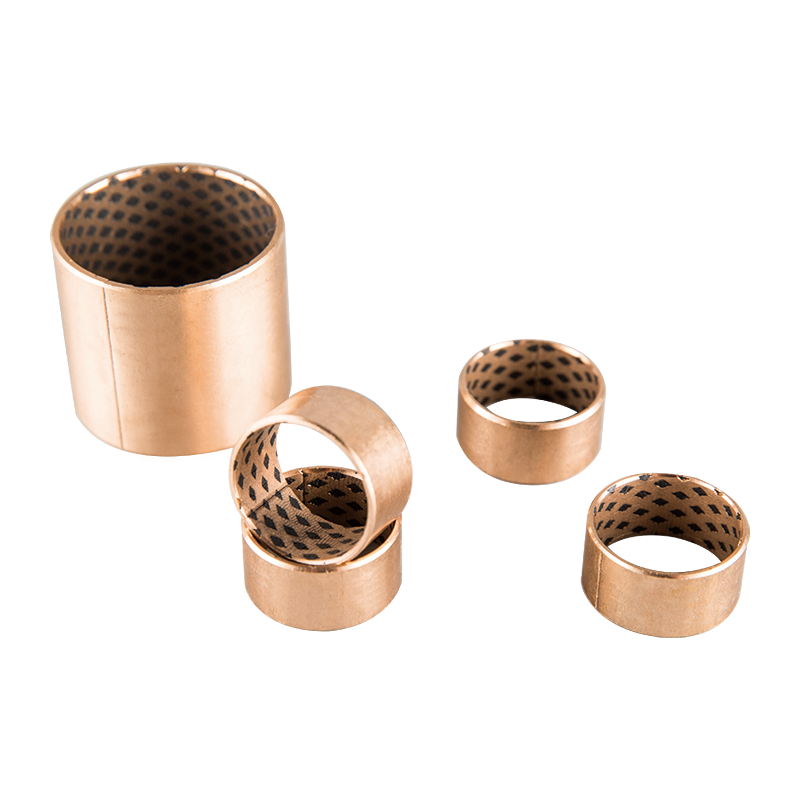
Structural Characteristics
- Thin-wall rolled bronze construction for compact installation
- Uniform wall thickness for consistent load distribution
- Surface oil pockets for improved lubricant retention
- High thermal conductivity compared to polymer bushings
Load Capacity and Operating Performance
FB090 bronze rolled bearings are widely used in applications requiring moderate load capacity combined with stable rotational movement. The bronze alloy offers strong compressive strength and resistance to deformation under dynamic loads. When properly lubricated, these bearings can operate at relatively high sliding speeds without significant wear.
Heat dissipation is a key advantage of bronze material. During continuous operation, friction-generated heat is transferred efficiently through the bearing wall into the housing. This property reduces the risk of thermal expansion imbalance and maintains dimensional stability in heavy-duty machinery.
Performance Considerations
- Suitable for oscillating and rotational movement
- Effective under boundary lubrication conditions
- Resistant to shock loads in mechanical systems
- Stable dimensional performance under temperature variation
Comparison with Other Bronze and Composite Bearings
Compared with solid bronze bushings, FB090 bronze rolled bearings offer material efficiency and easier installation due to their thin-wall structure. In contrast to bimetal or composite bearings, FB090 bearings rely entirely on bronze alloy for load-bearing capacity rather than a steel backing layer.
The following table outlines structural and application differences between common bearing types used in industrial equipment.
| Bearing Type | Base Material | Lubrication Method | Typical Application |
| FB090 Rolled Bronze | Tin Bronze Strip | Grease or Oil | Construction Machinery |
| Solid Bronze Bushing | Cast Bronze | Manual Lubrication | Heavy Load Shafts |
| Bimetal Bearing | Steel + Bronze Layer | Oil Film | Automotive Engines |
Installation Guidelines for Stable Operation
Correct installation is essential to maintain the dimensional accuracy and performance of FB090 bronze rolled bearings. The housing bore must be machined to the specified tolerance to ensure proper interference fit. Excessive press force can deform the thin-wall structure, while insufficient interference may lead to rotation of the bearing within the housing.
Lubrication should be applied before assembly to fill the surface oil pockets. After installation, shaft alignment must be checked to prevent uneven wear. During operation, periodic lubrication intervals should be maintained according to load and environmental conditions.
Installation Precautions
- Ensure housing bore tolerance matches bearing specification
- Avoid hammering directly on bearing surface
- Pre-lubricate oil pockets before operation
- Verify shaft surface finish to reduce friction
Typical Industrial Applications
FB090 bronze rolled bearings are widely applied in construction equipment, agricultural machinery, lifting devices, and material handling systems. These environments often involve dust, vibration, and intermittent heavy loads. The bronze structure provides stable performance in such demanding conditions when combined with proper lubrication.
In hydraulic cylinders and articulated joints, the bearing accommodates oscillating motion while maintaining structural integrity. In conveyor systems and industrial presses, it supports rotational shafts with consistent wear resistance. Selection should always consider load direction, shaft hardness, and lubrication access.
Maintenance and Service Life Optimization
To extend the service life of FB090 bronze rolled bearings, routine inspection and lubrication management are required. Contaminants such as dust or metal particles can accelerate wear if not controlled. Installing protective seals or covers reduces exposure to debris in harsh environments.
Monitoring operating temperature and vibration levels provides early detection of alignment issues or lubrication failure. When wear exceeds acceptable tolerance, timely replacement prevents damage to shafts and housings. Proper operational management ensures that the bearing delivers consistent mechanical performance throughout its designed lifecycle.