English
 русский
 Español
 عربى

A gearbox that runs hot after 40 minutes is often not a gear problem; it is a bearing support problem. When the input shaft bearing loses its oil film, friction rises, clearance changes, and the gear mesh receives the misalignment. The result is whining, axial play, and premature pitting on the gear flanks.
Bottom line: the bearing in a gearbox is a load-path component, not a catalog afterthought. Choose it by shaft position, radial and axial load direction, speed, lubrication regime, and housing stiffness. A bearing that is oversized on static rating but wrong on clearance or oil supply can fail sooner than a smaller, correctly specified unit.
This article explains how bearings work inside gearboxes, compares common options, and gives a selection and maintenance sequence that reduces rework.
Content
- 1 How Bearings Carry Load Inside a Gearbox
- 2 Bearing Options Compared by Load, Speed, and Lubrication
- 3 Hidden Failure Drivers That Shorten Bearing Life
- 4 Application Mix: Where Gearbox Bearings Are Used
- 5 Selection Sequence That Avoids Bearing Rework
- 6 Maintenance and Compliance Checks Before the Next Overhaul
How Bearings Carry Load Inside a Gearbox
A gearbox usually has three shaft groups: input, intermediate, and output. Each shaft needs two supports, but the supports do not see the same load. Helical gears add axial thrust; straight gears are mostly radial. The bearing arrangement must fix the shaft axially at one end and allow thermal growth at the other, or use a paired arrangement that controls both directions.
Radial Load Support
Cylindrical roller bearings and sleeve bearings carry high radial load with low friction. They are common on intermediate shafts where the gear mesh pushes sideways.
Axial Location
Tapered roller, angular contact, and flanged bushings control axial position. Without a clear axial fixed point, gear backlash and bearing preload drift with temperature.
Lubrication Regime
Oil bath, splash, grease, and boundary films behave differently. The bearing must match the oil supply at start-up, not only at operating temperature.
For low-speed output shafts and high radial loads, a bimetal composite bushing can replace a bronze sleeve when the housing can accept a thin wall. The steel backing carries the press fit; the bronze overlay provides the running surface. The bimetal composite bearing guide explains the layer structure and load limits.
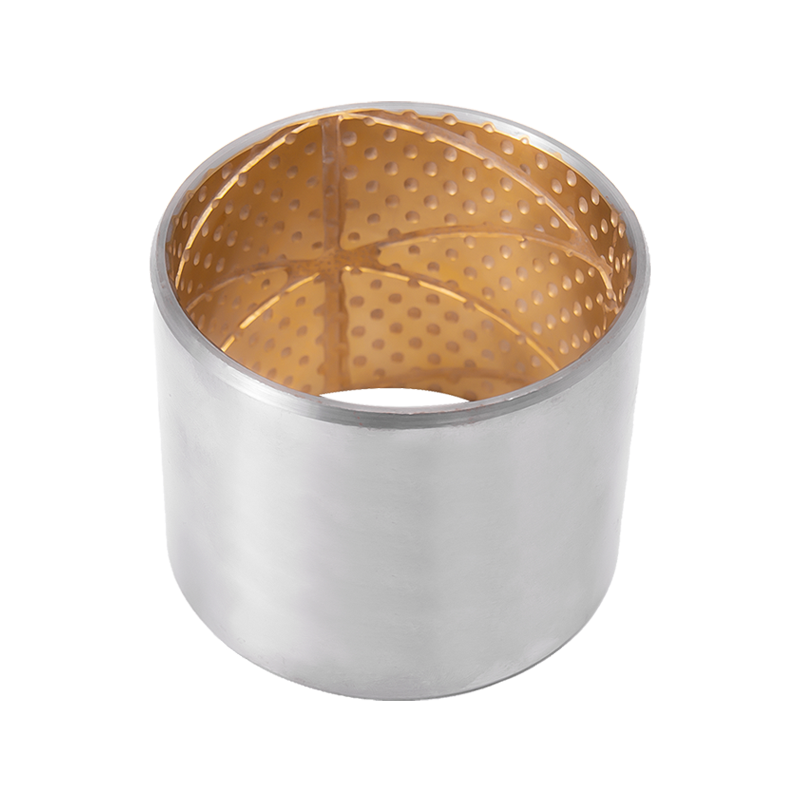 HZ802 Oil-Groove Bimetallic Composite BearingHZ802 oil-groove bimetallic composite bearing uses a steel backing and lead-bronze running layer for lubricated, high-load press-fit applications.View Product →
In gearboxes that start under load or run with marginal oil film, boundary-lubricated bearings with a porous sintered copper layer and POM filler can maintain a low-friction transfer film. They are not a substitute for oil analysis, but they buy time during start-stop cycles.
Bearing Options Compared by Load, Speed, and Lubrication
The comparison below is relative. Final selection depends on shaft diameter, duty cycle, oil cleanliness, and housing stiffness.
Boundary-lubricated bearings are often selected when grease retention is poor or the shaft is hard to seal. For dry-start or marginal-film conditions, the boundary lubrication fundamentals are a useful reference for checking PV limits and running-in.
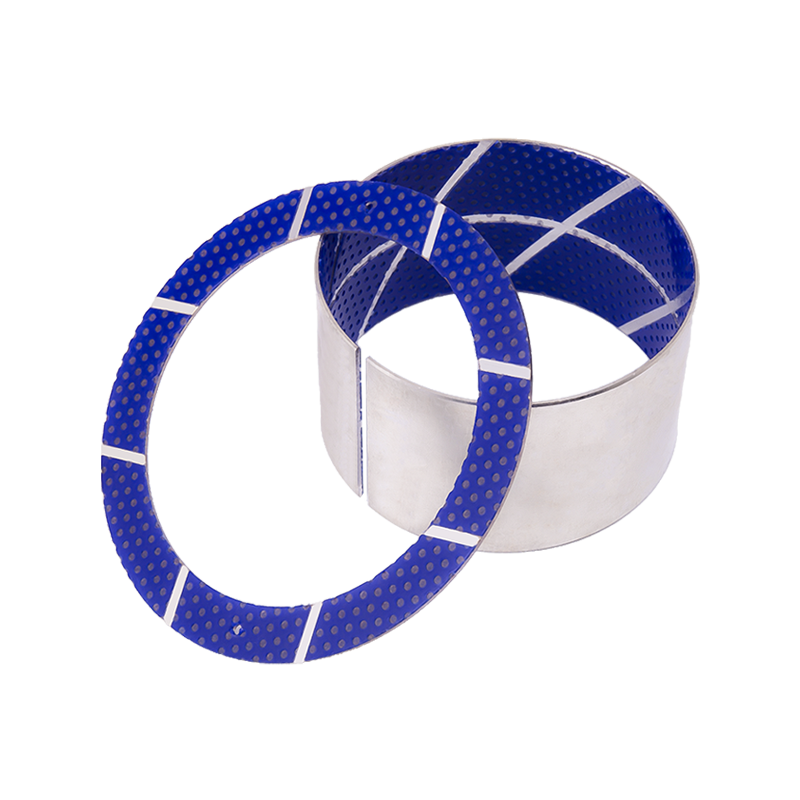 HZ2B Porous Sintered Copper POM Boundary BearingHZ2B boundary-lubricated sleeve bearing combines a porous sintered copper layer with blue POM/filler for low-speed, heavy-load swinging or rotating movements.View Product →
If the gearbox sees frequent stop-start and the oil film is not fully formed, a boundary-lubricated bearing with controlled clearance can reduce stick-slip. But verify the housing bore and shaft hardness; soft shafts wear quickly against any bearing.
Hidden Failure Drivers That Shorten Bearing Life
Static rating tables do not show the hidden drivers. In service checks, lubrication film loss, misalignment, contamination, overload, and installation damage usually explain more failures than a simple lack of dynamic capacity. The bar chart is an indicative service view, not a universal failure statistic.
38%
22%
18%
12%
10%
Application Mix: Where Gearbox Bearings Are Used
The pie is an indicative planning view for gearbox bearing demand, not a market forecast. Industrial gearboxes and automotive transmissions dominate because they combine high volume with varied load directions. Wind turbine gearboxes are fewer but demand high reliability and long service intervals. Material handling and other machinery add moderate volume with frequent start-stop.
Industrial gearboxes 35%
Automotive transmissions 25%
Wind turbine gearboxes 15%
Material handling 15%
Other machinery 10%
Selection Sequence That Avoids Bearing Rework
A practical sequence is to define the load case, choose the bearing arrangement, verify lubrication, then check the housing and shaft tolerances. Skipping the first two steps is how a premium bearing ends up with a short life.
- Map radial and axial loads at each shaft, including shock loads during start-up and jam conditions.
- Fix axial location and thermal growth. Decide which bearing locates the shaft and which one floats.
- Select bearing type and clearance. Check the minimum load, speed limit, and lubrication method.
- Verify lubrication at the worst case: cold start, low oil level, or grease starvation.
- Check interfaces: shaft hardness, housing bore tolerance, shoulder squareness, and seal runout.
- Run a pilot batch and measure temperature, vibration, and clearance after the first 200 hours.
For high-temperature auxiliary drives, a graphite copper bushing can operate where grease carbonizes. The wear-resistant graphite copper bushing uses graphite plugs in a copper alloy matrix to maintain a solid lubricant film when oil supply is intermittent.
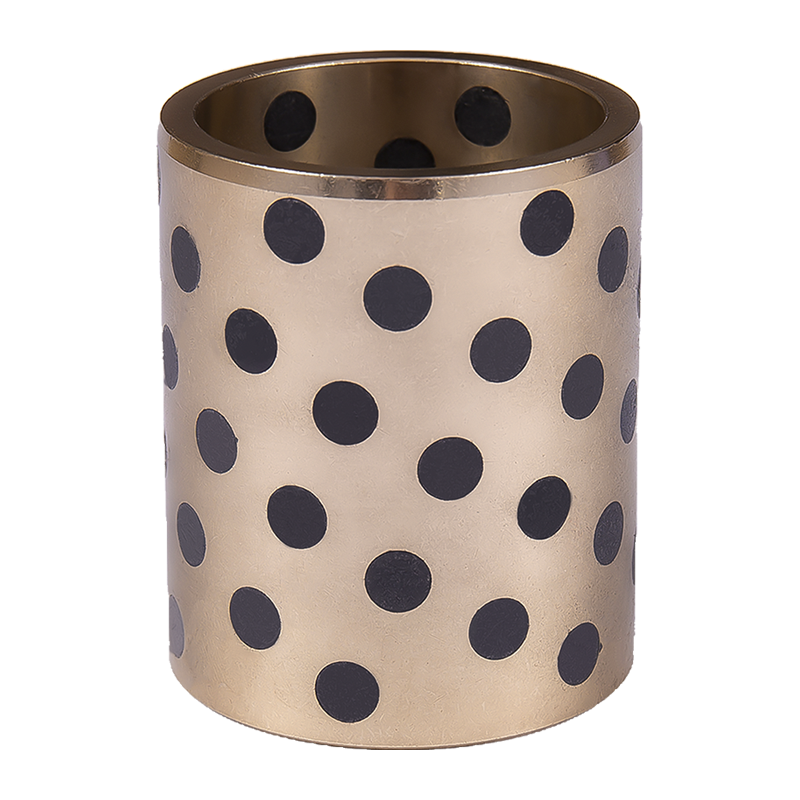 HZ-JDB Wear-Resistant Graphite Copper BushingHZ-JDB graphite copper bushing embeds solid lubricants in bronze for high-load, intermittent or oscillating motion where grease may carbonize.View Product →
The ROI is not only the bearing price. A low-cost bearing that fails in 1,200 hours can cost more than a higher-cost bearing that reaches 8,000 hours when you include labor, oil loss, and downtime. Use total cost per operating hour, not unit price.
Maintenance and Compliance Checks Before the Next Overhaul
Maintenance should measure the conditions that change bearing life, not just listen for noise. Record oil cleanliness, operating temperature, shaft alignment, and clearance at each service interval.
- Oil cleanliness to the target ISO 4406 code; contamination is a direct abrasive path into the bearing.
- Clearance trend; a sudden increase points to wear, while a decrease points to overheating or preload loss.
- Alignment and housing bore roundness; both affect load distribution across the rolling elements or sleeve.
- Temperature at steady state and during start-up; a rising start-up temperature signals marginal lubrication.
- Lubricant compatibility; mixing greases or oils can change the film thickness and channeling behavior.
- Traceability; keep material certificates, dimensional reports, and the specified lubrication regime on file.
For procurement, require material certificates, dimensional reports, and a clear statement of the lubrication regime the bearing was designed for. A bearing that is dimensionally interchangeable may not be functionally interchangeable if the overlay thickness, graphite content, or clearance class changes.
Bearings in a gearbox are selected at the intersection of load path, lubrication, and maintenance. Start with the shaft position and load direction, confirm the oil film or boundary regime, then check the housing and shaft tolerances. That sequence keeps the gear mesh aligned and turns bearing life from a catalog number into a predictable service interval.